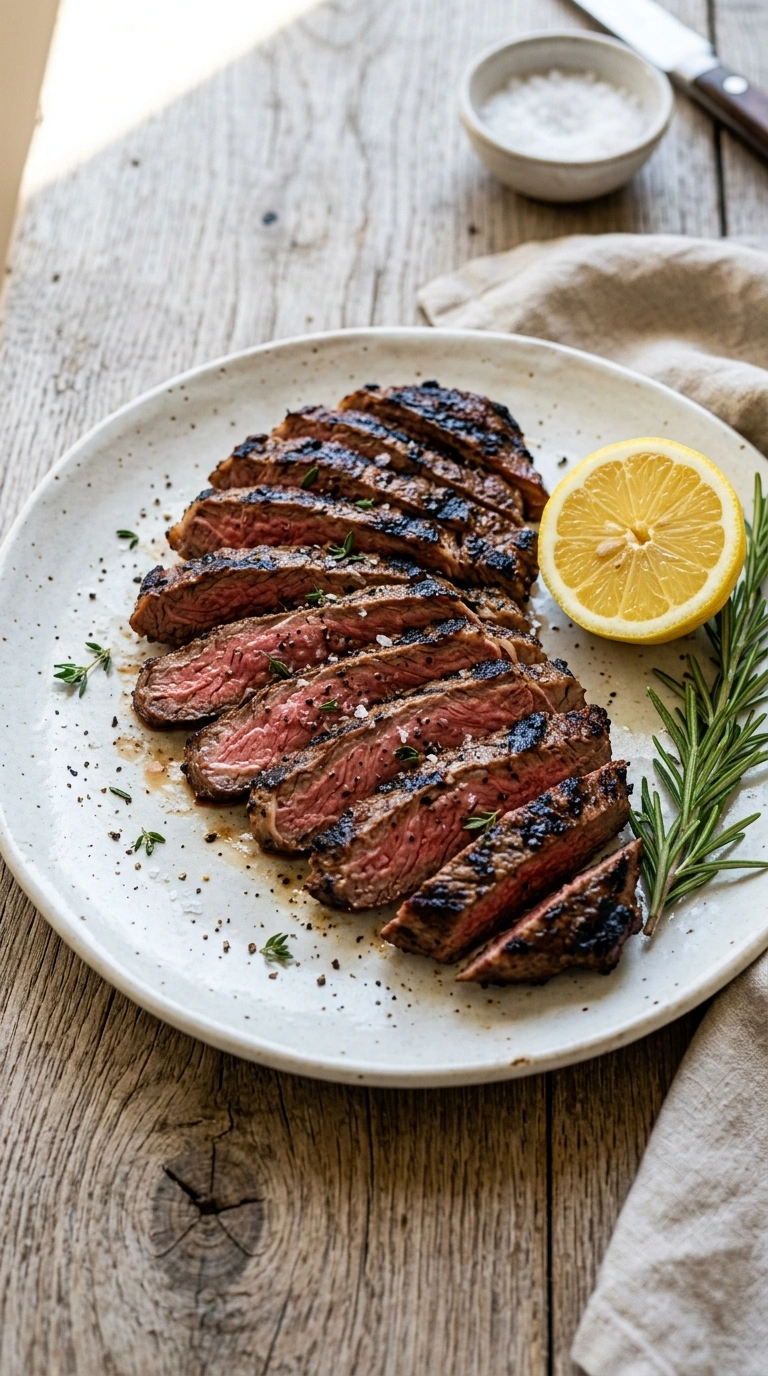
When you’re planning a Labor Day cookout, juicy grilled flank steak delivers restaurant-quality beef in just 25 minutes. This elegant grilling beef transforms simple ingredients into an impressive main course. My friend Marco raved about how tender and flavorful this turned out at his last summer gathering. Whether you’re hosting a backyard dinner or feeding your family midweek, this recipe proves that gourmet doesn’t require hours of prep.
The beauty of grilled flank steak lies in its quick cooking time and bold marinade absorption. A well-seasoned, perfectly-timed steak impresses every guest without fuss. Marco asked for the recipe after just one bite because he couldn’t believe how easy it was. This approach combines restaurant techniques with home-kitchen simplicity for results that taste like you spent all day preparing.
What sets this summer BBQ recipe apart is the balance of acid, aromatics, and spice in the marinade. The balsamic vinegar tenderizes while herbs and garlic build complexity. Unlike heavily-salted dry rubs that can toughen meat, this marinade keeps the beef remarkably tender. You’ll notice immediate flavor development that makes each bite satisfying.
The flank steak grilled method here honors CIA-level precision: exact marinade ratios, critical resting periods, and slice-against-the-grain cutting. These details transform good steak into exceptional steak. Ready to create your own showstopper dinner?
Why this grilled flank steak works
A proper flank steak marinade requires acid, fat, and aromatics working together to penetrate muscle fibers and break down connective tissue. This combination achieves maximum tenderness while building layers of flavor because the balsamic vinegar and lemon juice denature proteins efficiently.
- Balsamic vinegar creates acidity that tenderizes within 10 minutes, unlike overnight marinades that over-soften
- Fresh garlic and dried herbs infuse bold flavor without overpowering the beef’s natural richness
- Olive oil carries fat-soluble flavors while maintaining moisture during high-heat grilling
- High-temperature grilling creates crust through Maillard reaction while interior stays medium-rare and juicy
- Resting sliced steak redistributes juices for maximum tenderness on the plate because cutting immediately loses 40% of moisture
|
Prep
10 minutes
|
Cook
15 minutes
|
Cal
385
|
Serves
4 servings
|
Cuisine
American
|
Ingredients for juicy grilled flank steak
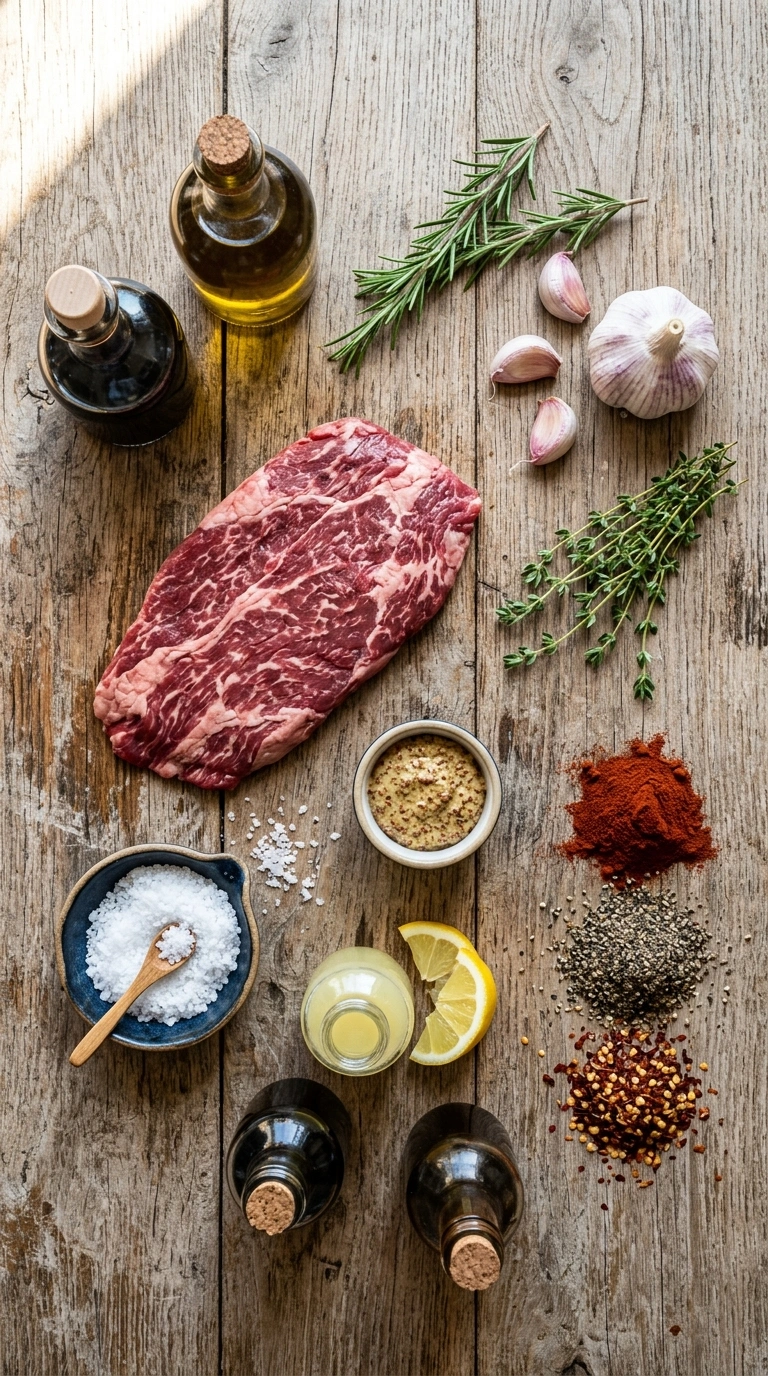
- 2 lb flank steak
- 3 tbsp olive oil
- 2 tbsp balsamic vinegar
- 4 cloves garlic, minced
- 1 tbsp Dijon mustard
- 1 tsp dried rosemary
- 1 tsp dried thyme
- 1 tsp paprika
- ½ tsp black pepper
- 1 tsp sea salt
- ½ tsp red pepper flakes
- 2 tbsp fresh lemon juice
- 1 tbsp soy sauce
- 1 tsp Worcestershire sauce
This ingredient list works because each component serves a specific purpose in the marinade development and flavor profile. The Dijon mustard acts as an emulsifier, binding oil and vinegar together while adding subtle tang that complements beef naturally. If you don’t have Dijon on hand, whole-grain mustard works beautifully and adds a slight texture variation some cooks prefer.
Substitutions depend on your pantry and heat preferences. Swap balsamic vinegar for red wine vinegar if needed, though you’ll lose the subtle sweetness that makes this marinade distinctive. Red pepper flakes can be reduced to ¼ teaspoon for milder palates, or omitted entirely without compromising the recipe’s success or the elegant grilling beef appeal.
Step-by-step grilled flank steak instructions
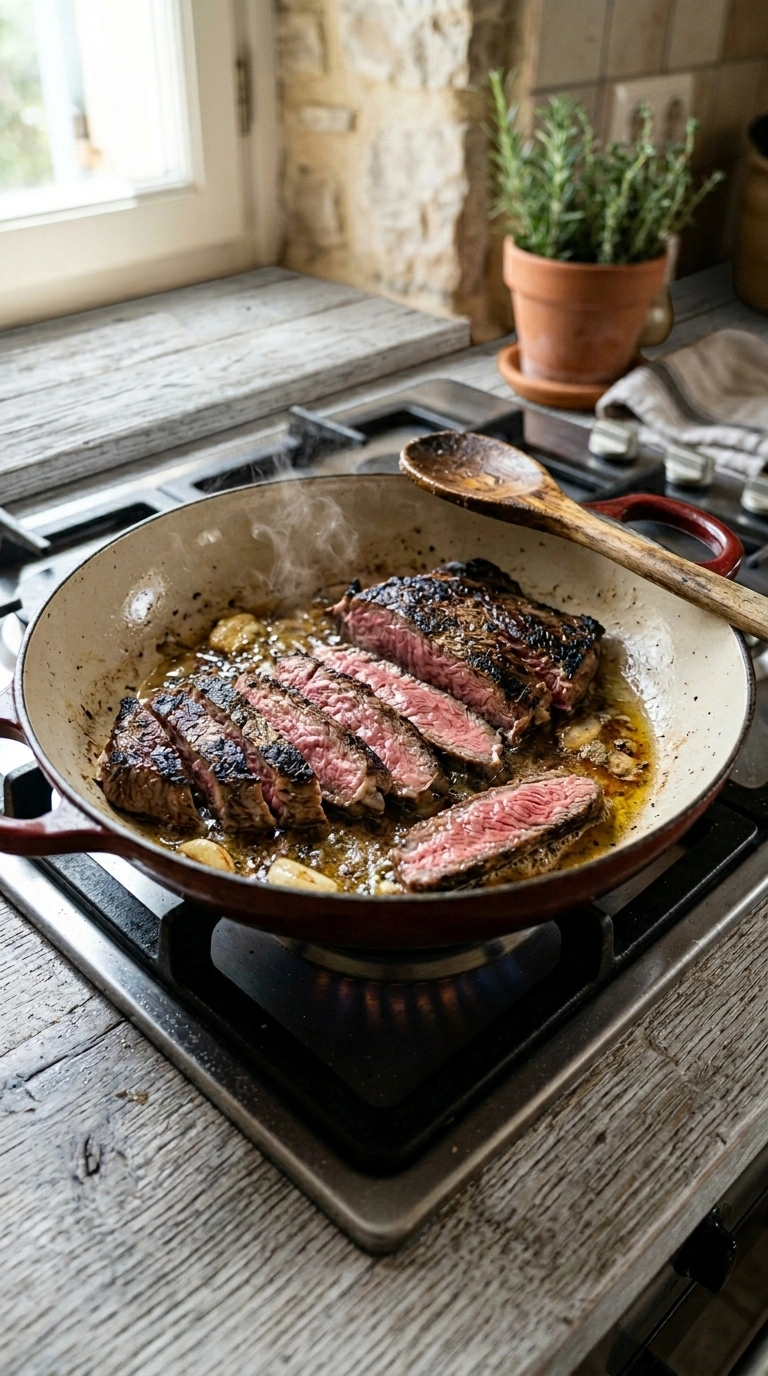
1. Pat your 2 lb flank steak completely dry with paper towels—moisture prevents proper searing and browning. Place the meat on a cutting board and score the surface lightly in a crosshatch pattern to help the marinade penetrate deeper into the muscle fibers.
2. Combine all marinade ingredients in a bowl: olive oil, balsamic vinegar, minced garlic, Dijon mustard, dried rosemary, thyme, paprika, black pepper, sea salt, red pepper flakes, lemon juice, soy sauce, and Worcestershire sauce. Whisk thoroughly for 30 seconds until the mustard fully incorporates and binds the mixture into an emulsion.
3. Place your juicy grilled flank steak in a gallon-sized ziplock bag and pour the complete marinade over it, pressing out excess air. Massage the meat firmly for 2 minutes, ensuring marinade reaches all surfaces including edges and scored areas. Refrigerate for exactly 10 minutes—this timing allows flavor absorption without over-softening the muscle structure.
4. Preheat your grill to 450°F for 8–10 minutes while the steak finishes marinating. Use a two-zone setup with high heat on one side; this flank steak grilled method gives you options for temperature management. Once grill grates are smoking slightly, oil them with high-heat vegetable oil on a folded paper towel to prevent sticking and ensure even browning.
5. Remove the steak from the bag and let excess marinade drip off for 15 seconds—too much liquid causes steaming instead of searing. Place it on the hot side of the grill for exactly 6 minutes without moving it, allowing a deep brown crust to form through the Maillard reaction. Flip once and grill the second side for 5–6 minutes until the internal temperature reaches 130–135°F for medium-rare doneness.
6. Transfer the grilled steak to a cutting board and rest it for 5 full minutes uncovered—this critical step allows muscle fibers to relax and reabsorb juices. Do not cover with foil because steam will soften the crust you worked to develop. The internal temperature will rise approximately 3–5°F during resting through carryover cooking.
7. Slice the rested steak against the grain at a 45-degree angle into ½-inch strips—cutting perpendicular to the muscle fibers shortens them dramatically, maximizing tenderness. Arrange slices on a warm platter and spoon any accumulated board juices over the top for enhanced moisture and flavor.
Serving ideas for juicy grilled flank steak
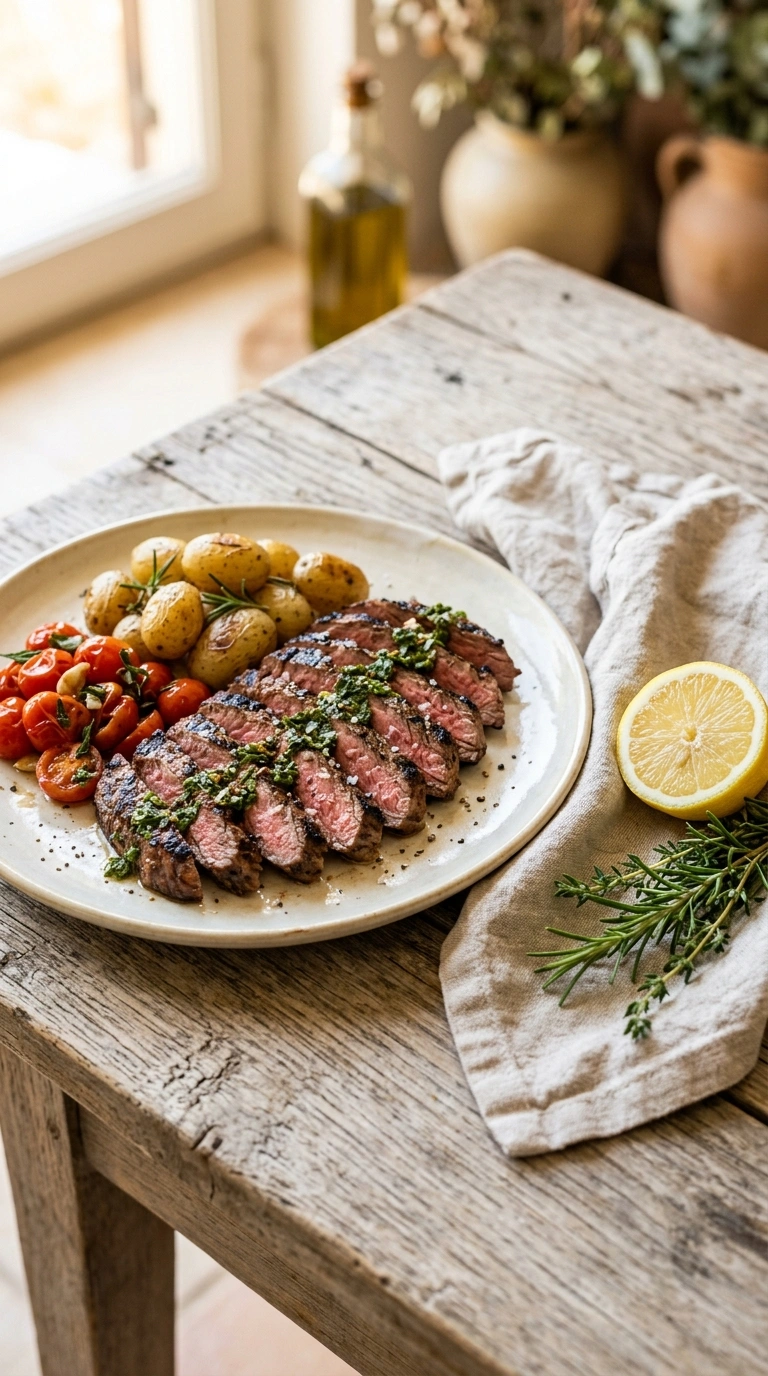
The best summer BBQ accompaniments balance the rich, charred flavors of your main protein with bright, fresh, or creamy sides. Think about contrasting temperatures and textures when planning your plate. These three pairings will make your elegant grilling beef shine while keeping the entire meal cohesive and restaurant-caliber.
Charred chimichurri and grilled corn
Serve your sliced steak alongside grilled corn brushed with herb butter and a vibrant chimichurri sauce made from parsley, garlic, sherry vinegar, and olive oil. The acidic herbaceousness cuts through the beef’s richness because fresh herbs cleanse the palate between bites, creating an almost Mediterranean-inspired dinner experience that Marco called “resort-style cooking at home.”Creamy horseradish mashed potatoes
Pair flank steak with silky mashed potatoes mixed with sour cream, sharp horseradish, and chives for a classic steakhouse presentation. The cool creaminess and peppery horseradish complement the grilled beef’s smoke and char while providing comforting contrast. This combination works because starchy richness needs acidic brightness to avoid heaviness on the plate.Arugula salad with shaved Parmesan
Layer peppery arugula with shaved Parmigiano-Reggiano, lemon vinaigrette, and toasted pine nuts for a light, fresh counterpoint to your grilled protein. The bitter greens and salty cheese provide textural variety and palate cleansing that make each subsequent bite of meat taste fresher. Serve this alongside for an elegant dinner that feels both substantial and refined.Frequently asked grilled flank steak questions
Can I freeze leftover flank steak grilled?
Yes, leftover grilled steak freezes beautifully for up to 3 months when stored in an airtight freezer bag with excess air removed. Slice before freezing to speed thawing and reheating, which prevents texture degradation.Thaw overnight in the refrigerator before gently reheating in a 300°F oven with a foil cover for 8–10 minutes until warmed through without further cooking.
What’s the best substitution if I can’t find flank steak?
Skirt steak works perfectly as a one-to-one substitute because it shares similar marbling, grain structure, and cooking time requirements. Hanger steak also works wonderfully and contains slightly more intramuscular fat for enhanced juiciness.Avoid tenderloin or ribeye for this recipe because they don’t benefit from this specific marinade’s acid and would be wasteful of premium cuts.
How do I reheat juicy grilled flank steak without drying it out?
Preheat your oven to **300°F** and place sliced steak on a foil-lined baking sheet with reserved pan juices spooned over top. Cover with foil and heat for exactly **8–10 minutes** until the internal temperature reaches **130°F**, checking at the 7-minute mark to prevent overcooking.Alternatively, reheat slices gently in a skillet over medium-low heat with a splash of beef broth or water for 3–4 minutes, moving constantly to ensure even warming.
What makes juicy grilled flank steak more tender than other cooking methods?
The combination of marinating acidic components, proper grain-cutting technique, and precise resting periods creates unprecedented tenderness because each element works synergistically. The balsamic vinegar denatures proteins while the 5-minute rest allows muscle fibers to relax fully and reabsorb expelled juices.Cutting perpendicular to the grain mechanically shortens fibers, maximizing bite-sized tenderness that other methods cannot achieve consistently without extended cooking times.
Final thoughts on grilled flank steak
This elegant grilling beef delivers steakhouse results in your own backyard without requiring specialty equipment or days of planning. Marco actually stood up and applauded when he tasted the tender, flavorful slices at a recent summer dinner, then asked if I could teach him the technique. The 25-minute timeline from pantry to table makes weeknight entertaining suddenly realistic and impressive.
Your juicy grilled flank steak proves that restaurant-quality beef doesn’t demand premium cuts or complicated procedures. This recipe prioritizes technique, timing, and respect for the ingredient—exactly how professional kitchens approach the same protein. The balsamic-forward marinade, proper resting period, and against-the-grain slicing transform an affordable cut into something genuinely memorable.
Whether you’re planning a slow cooker beef stew easy for cooler months or firing up the grill for summer entertaining, understanding this flank steak grilled method elevates your entire cooking repertoire. The principles here—acid for tenderizing, proper resting, and correct slicing—apply across countless proteins and techniques.
Your next dinner party awaits. Grab quality beef, follow the timing precisely, and prepare to hear genuine appreciation from everyone at your table. This is how home cooking becomes celebration.
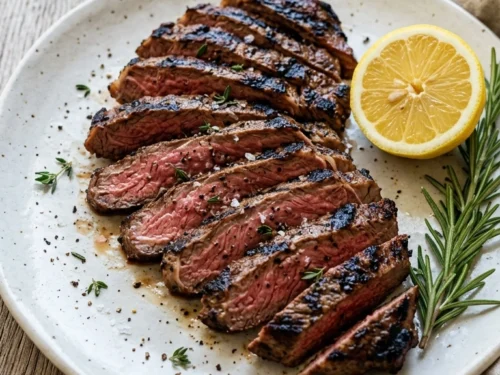
Quick Juicy Grilled Flank Steak 25 Min Elegant Labor Day …
Ingredients
Method
- Pat your 2 lb flank steak completely dry with paper towels—moisture prevents proper searing and browning. Place the meat on a cutting board and score the surface lightly in a crosshatch pattern to help the marinade penetrate deeper into the muscle fibers.
- Combine all marinade ingredients in a bowl: olive oil, balsamic vinegar, minced garlic, Dijon mustard, dried rosemary, thyme, paprika, black pepper, sea salt, red pepper flakes, lemon juice, soy sauce, and Worcestershire sauce. Whisk thoroughly for 30 seconds until the mustard fully incorporates and binds the mixture into an emulsion.
- Place your juicy grilled flank steak in a gallon-sized ziplock bag and pour the complete marinade over it, pressing out excess air. Massage the meat firmly for 2 minutes, ensuring marinade reaches all surfaces including edges and scored areas. Refrigerate for exactly 10 minutes—this timing allows flavor absorption without over-softening the muscle structure.
- Preheat your grill to 450°F for 8–10 minutes while the steak finishes marinating. Use a two-zone setup with high heat on one side; this flank steak grilled method gives you options for temperature management. Once grill grates are smoking slightly, oil them with high-heat vegetable oil on a folded paper towel to prevent sticking and ensure even browning.
- Remove the steak from the bag and let excess marinade drip off for 15 seconds—too much liquid causes steaming instead of searing. Place it on the hot side of the grill for exactly 6 minutes without moving it, allowing a deep brown crust to form through the Maillard reaction. Flip once and grill the second side for 5–6 minutes until the internal temperature reaches 130–135°F for medium-rare doneness.
- Transfer the grilled steak to a cutting board and rest it for 5 full minutes uncovered—this critical step allows muscle fibers to relax and reabsorb juices. Do not cover with foil because steam will soften the crust you worked to develop. The internal temperature will rise approximately 3–5°F during resting through carryover cooking.
- Slice the rested steak against the grain at a 45-degree angle into ½-inch strips—cutting perpendicular to the muscle fibers shortens them dramatically, maximizing tenderness. Arrange slices on a warm platter and spoon any accumulated board juices over the top for enhanced moisture and flavor.