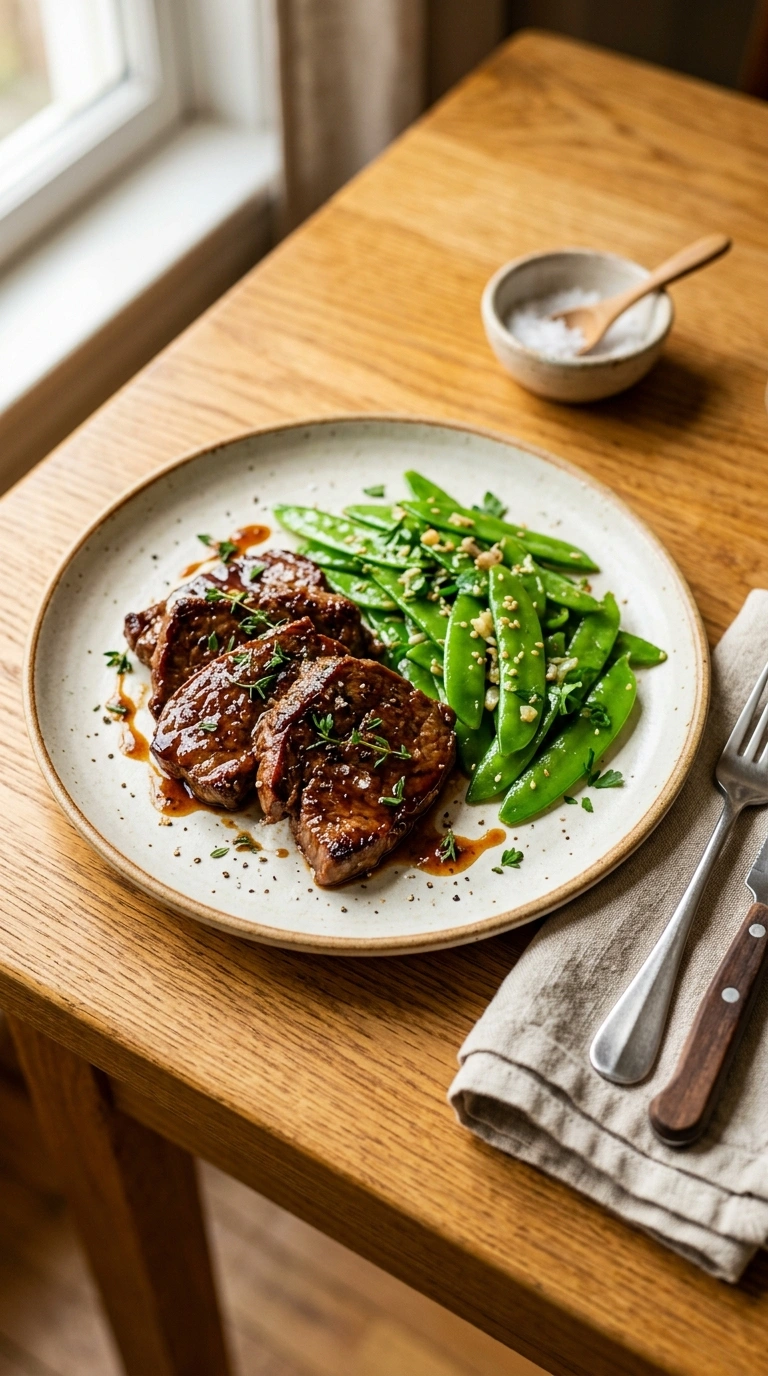
Tender beef and snow peas come together in just 27 minutes for an elegant weeknight dinner that tastes like restaurant takeout. Marco, my culinary mentor, taught me that the secret to perfect stir-fries lies in proper knife work and heat control.
The beef snow peas combination transforms humble ingredients into something truly special. High-heat cooking locks in flavor while keeping vegetables crisp and vibrant.
This stunning beef dish delivers CIA-level precision without demanding hours in the kitchen. Unlike heavy casseroles or slow-cooked braises, ground beef potato dinner recipes often take longer and feel heavier—this stir-fry offers elegance in under half an hour.
Marco always says that Asian beef stir fry thrives on technique, not complexity. You’ll have an impressive meal ready before most people finish their commute home.
Why this beef snow peas combination works
This beef stir fry excels because it balances tender protein with crisp vegetables in a silky sauce that clings beautifully to every bite.
- High-heat searing creates a caramelized crust while maintaining a juicy, pink center inside beef slices.
- Snow peas stay snappy and bright green, providing textural contrast that elevates the entire dish.
- Garlic and ginger build aromatic depth without overpowering the delicate sweetness of the snow peas.
- The cornstarch slurry creates a glossy sauce that coats vegetables and beef evenly for professional presentation.
I believe this elegant weeknight dinner deserves a place in your regular rotation because it proves that restaurant-quality food doesn’t require restaurant hours.
|
Prep
15 minutes
|
Cook
12 minutes
|
Cal
285
|
Serves
4 servings
|
Cuisine
Asian
|
Ingredients for tender beef and snow peas
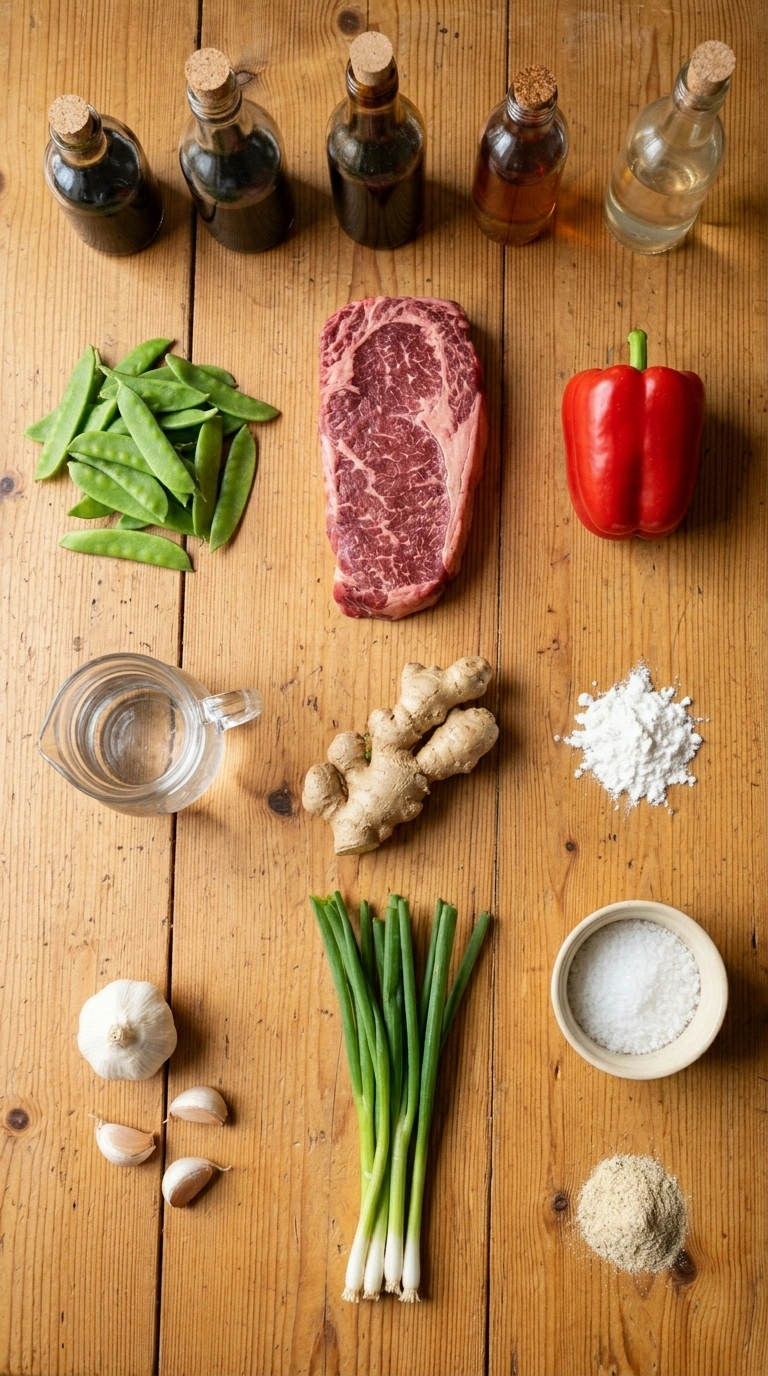
- 1.5 lb beef sirloin, thinly sliced
- 3 cups snow peas
- 3 cloves garlic, minced
- 1 tbsp fresh ginger, minced
- 3 tbsp soy sauce
- 1 tbsp oyster sauce
- 1 tsp sesame oil
- 2 tbsp vegetable oil
- 1 cup beef broth
- 1 tbsp cornstarch
- 2 tbsp water
- 1 red bell pepper, sliced
- 2 green onions, chopped
- 1 tsp white pepper
- 1 tbsp rice vinegar
For beef substitutions, flank steak or strip steak work beautifully when cut against the grain into thin strips. If snow peas aren’t available, sugar snap peas provide nearly identical texture and sweetness—use the same quantity. You can swap oyster sauce for hoisin sauce, though the flavor profile becomes slightly sweeter. Fresh ginger cannot be truly replaced, but ground ginger works in a pinch at half the amount.
Marco recommends slicing your beef partially frozen for cleaner cuts that cook evenly. Prep all ingredients before you start cooking—this dish moves quickly, and mise en place prevents scrambling mid-cook. The cornstarch slurry prevents lumps when whisked into cold water before adding to the pan.
Step-by-step beef snow peas instructions
1. Combine cornstarch and water in a small bowl, whisking until completely smooth with no lumps. Add soy sauce, oyster sauce, sesame oil, rice vinegar, and beef broth to the cornstarch mixture. Stir well and set the sauce aside—this prevents clumping when it hits the hot pan later.
2. Pat beef sirloin slices dry with paper towels to ensure proper browning and crust development. Season with white pepper just before cooking to prevent moisture loss during prep. This crucial step guarantees that your beef achieves restaurant-quality searing.
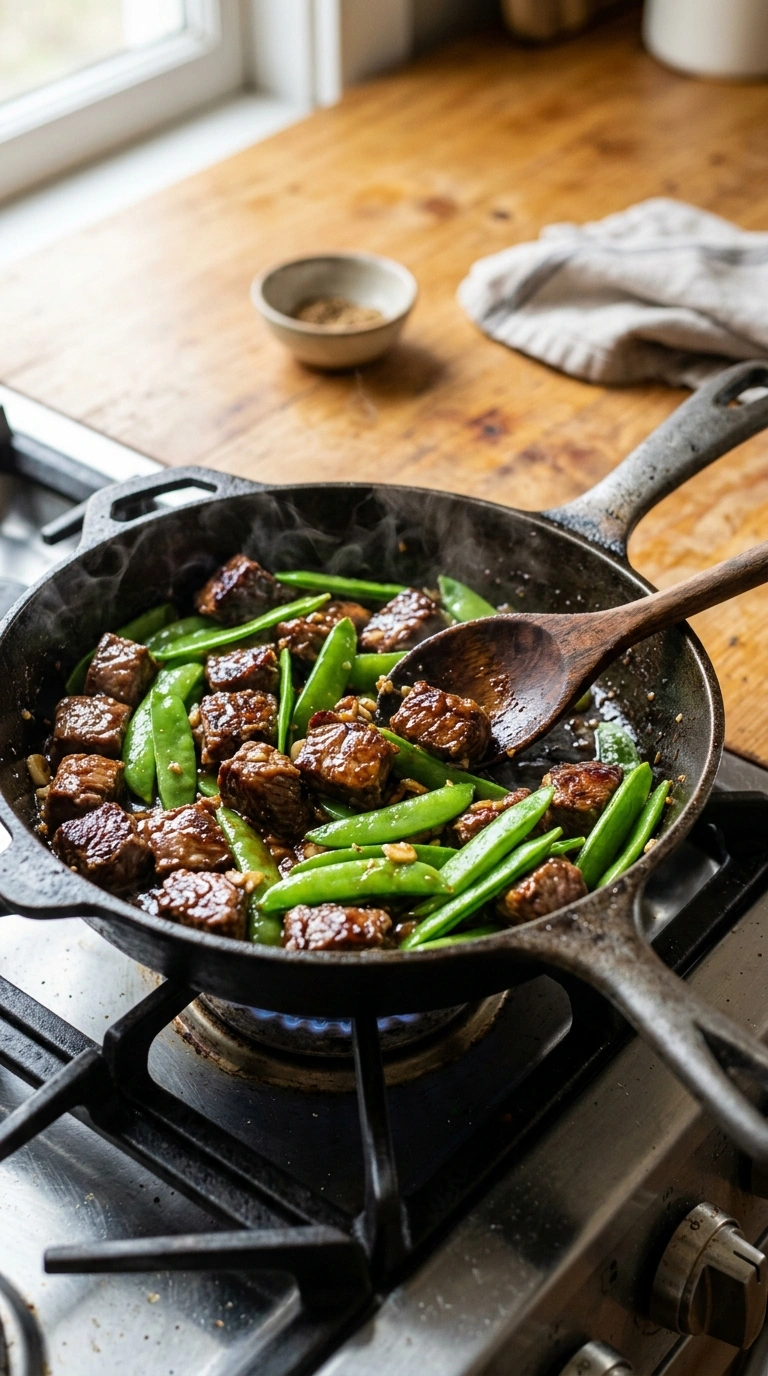
3. Heat vegetable oil in a large wok or skillet over high heat for 2 minutes until it shimmers. Working in two batches to avoid crowding, sear the beef for 60-90 seconds per side until deeply browned. Transfer cooked beef to a clean plate and set aside—do not skip the resting period.
4. In the same wok, add garlic and ginger, stirring constantly for exactly 30 seconds until fragrant. Add sliced red bell pepper and snow peas, tossing continuously for 2-3 minutes until vegetables begin to soften slightly but remain crisp. This tender beef and snow peas combination requires precise timing to maintain that signature texture contrast.
5. Return the seared beef to the wok along with any accumulated juices. Pour the prepared sauce over everything and toss gently but thoroughly for 1-2 minutes until the sauce thickens and coats all ingredients evenly. The mixture should transform from thin liquid to glossy, clinging sauce within seconds.
6. Remove from heat and stir in chopped green onions. Taste and adjust seasoning with additional soy sauce or rice vinegar as needed. Serve immediately while the Asian beef stir fry remains hot and the vegetables maintain their ideal texture.
Serving ideas for tender beef and snow peas
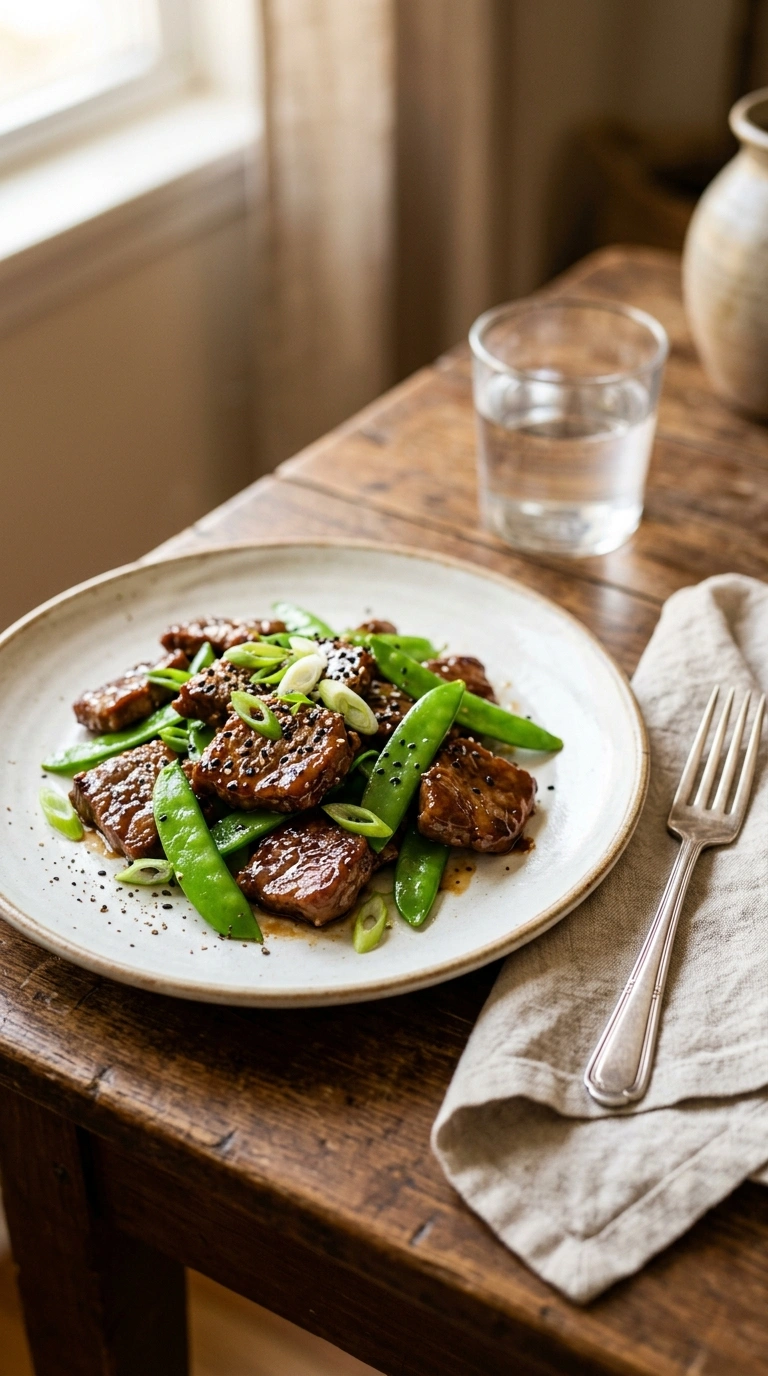
This stunning beef dish pairs beautifully with simple carbohydrate bases and complementary sides that don’t compete with the delicate flavors already present.
Jasmine rice foundation
Fluffy jasmine rice provides the perfect neutral canvas for this elegant weeknight meal. The subtle floral notes of jasmine rice complement the beef snow peas combination without overwhelming the soy-ginger sauce. Serve over a bed of jasmine rice and watch your family request this dish weekly.
Brown rice with sesame
For a nuttier profile, brown rice adds earthiness that enhances the overall richness. Drizzle cooked brown rice with a touch of sesame oil and toasted sesame seeds. This pairing creates depth while keeping the focus on your impressive beef stir fry. beautiful baked chicken thighs elegant deserve equally elegant sides—this brown rice option works perfectly.
Noodle nest presentation
Crispy chow mein noodles or ramen noodles create textural interest beneath or alongside the beef. Toss noodles with a light coating of sesame oil and serve the Asian beef stir fry spooned over top. This restaurant-style presentation turns weeknight dinner into a special occasion without extra effort.
Frequently asked beef snow peas questions
Can you freeze tender beef and snow peas stir-fry?
Yes, absolutely—freeze for up to two months in an airtight container. Thaw overnight in the refrigerator before reheating gently on the stovetop with a splash of broth added back. The beef snow peas combination maintains acceptable texture even after freezing, though vegetables lose some crispness.
What’s the best beef cut for this stir fry?
Sirloin, flank steak, or strip steak all work wonderfully when sliced thin against the grain. Avoid fatty cuts like ribeye since the fat doesn’t render properly during quick cooking. Freezing your beef partially before slicing ensures clean cuts that cook evenly throughout.
How do you reheat this Asian beef stir fry without drying out the meat?
Reheat gently over medium heat in a covered skillet with a tablespoon of broth to restore moisture. Avoid high heat, which toughens the protein and can scorch the sauce. The tender beef and snow peas combination actually improves slightly after sitting overnight as flavors deepen and marry.
Why does tender beef and snow peas stir-fry taste better than homemade versions?
Restaurant versions often use higher heat than home stoves provide, plus they employ more oil and salt than most home cooks feel comfortable using. This recipe balances restaurant technique with reasonable health choices through proper searing and sauce ratios. Marco taught me that technique matters more than secret ingredients—high heat and proper timing create the magic.
Final thoughts on beef stir fries
Tender beef and snow peas represents the intersection of elegant weeknight dinners and genuinely impressive cooking technique. This 27-minute meal proves that you don’t sacrifice quality for convenience when you understand proper knife work and heat control.
Marco’s reaction when he first tasted this simplified version was pure surprise—he expected complexity but found only clean, bright flavors and perfect texture. The asian beef stir fry demonstrates that sometimes less truly means more, and respecting your ingredients matters more than drowning them in sauce.
Your family will believe you’ve been taking secret cooking classes after serving this dish. elegant slow cooker pulled chicken has its place on busy nights, but this beef snow peas combination deserves regular rotation in your weeknight dinner arsenal.
Make this recipe tonight—your table deserves elegance that doesn’t demand hours of preparation.
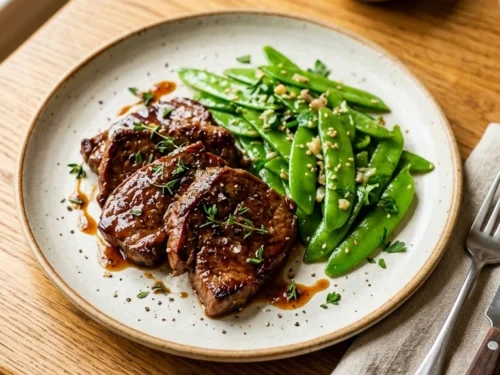
Quick Tender Beef and Snow Peas Stir-Fry 27-Min Dinner
Ingredients
Method
- Combine cornstarch and water in a small bowl, whisking until completely smooth with no lumps. Add soy sauce, oyster sauce, sesame oil, rice vinegar, and beef broth to the cornstarch mixture. Stir well and set the sauce aside—this prevents clumping when it hits the hot pan later.
- Pat beef sirloin slices dry with paper towels to ensure proper browning and crust development. Season with white pepper just before cooking to prevent moisture loss during prep. This crucial step guarantees that your beef achieves restaurant-quality searing.
- Heat vegetable oil in a large wok or skillet over high heat for 2 minutes until it shimmers. Working in two batches to avoid crowding, sear the beef for 60-90 seconds per side until deeply browned. Transfer cooked beef to a clean plate and set aside—do not skip the resting period.
- In the same wok, add garlic and ginger, stirring constantly for exactly 30 seconds until fragrant. Add sliced red bell pepper and snow peas, tossing continuously for 2-3 minutes until vegetables begin to soften slightly but remain crisp. This tender beef and snow peas combination requires precise timing to maintain that signature texture contrast.
- Return the seared beef to the wok along with any accumulated juices. Pour the prepared sauce over everything and toss gently but thoroughly for 1-2 minutes until the sauce thickens and coats all ingredients evenly. The mixture should transform from thin liquid to glossy, clinging sauce within seconds.
- Remove from heat and stir in chopped green onions. Taste and adjust seasoning with additional soy sauce or rice vinegar as needed. Serve immediately while the Asian beef stir fry remains hot and the vegetables maintain their ideal texture.