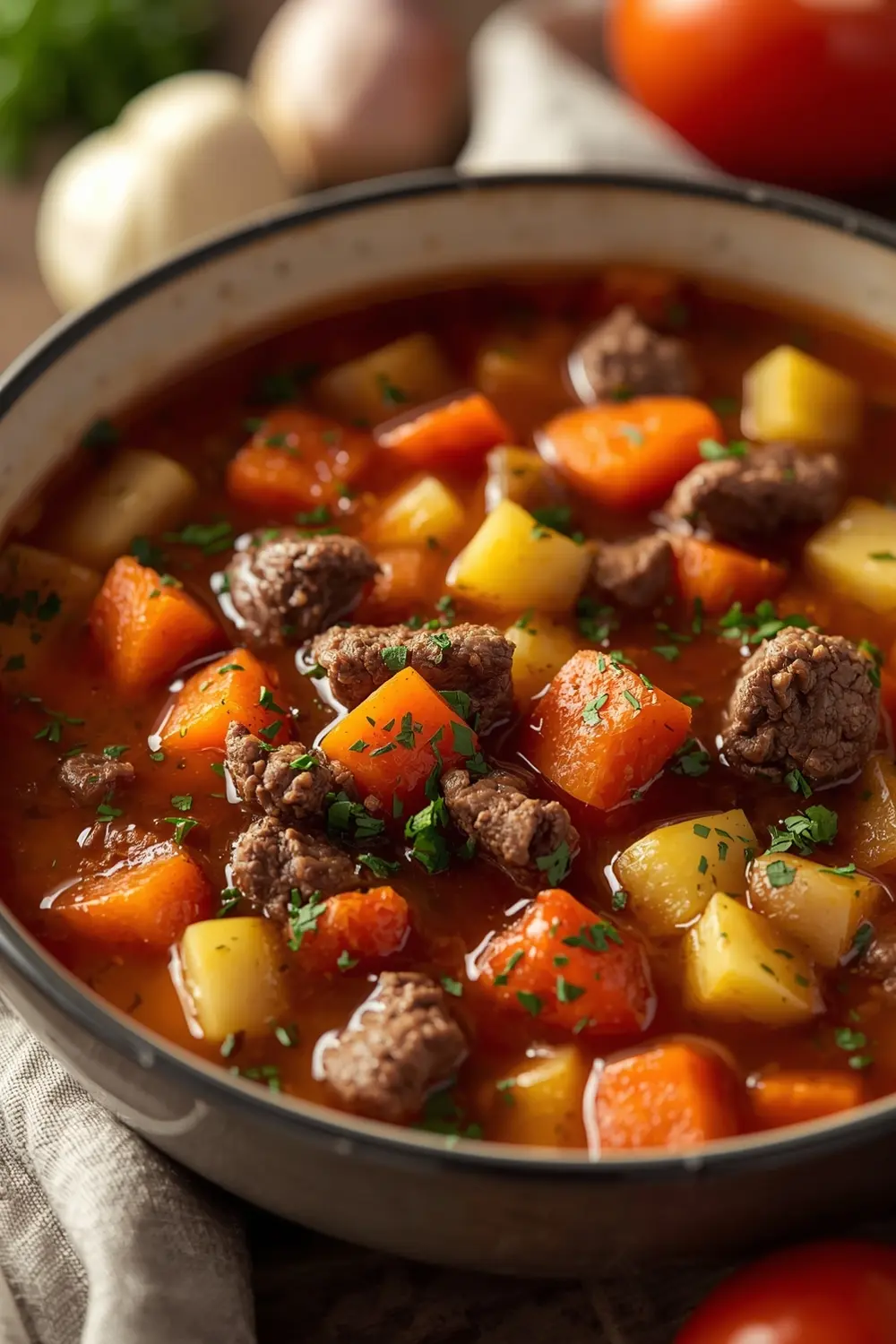
Vegetable beef soup recipe is literally my answer to every “what’s for dinner” question during the week. This hearty, filling soup comes together in under two hours and tastes even better the next day (seriously, make extra). It’s the kind of meal that makes your kitchen smell incredible and gets everyone asking for seconds.
Honestly, this beef vegetable soup recipe hits different because you’re building real flavor from scratch, not opening cans. I’ve been making versions of this for five years, and I keep coming back to this exact method because it never fails.
Need a quick weeknight dinner idea that satisfies the whole family? Bookmark this one for your meal prep rotation.
Why this vegetable beef soup works
Ever notice how some soups feel like actual food while others taste watery and forgettable? That’s because this version builds layers—you’re searing the beef first to lock in flavor, then creating a rich broth base with garlic and tomatoes.
- Comes together in one pot with zero complicated steps or equipment
- Rich, savory broth that makes every spoonful taste homemade and comforting
- Loaded with vegetables that actually stay tender without turning mushy
- Freezes beautifully so you’ve got backup dinners ready to go
| Prep Time | Cook Time | Calories | Servings | Cuisine |
|---|---|---|---|---|
| 20 minutes | 1 hour 15 minutes | 245 per serving | 8 servings | American |
Ingredients for vegetable beef soup recipe
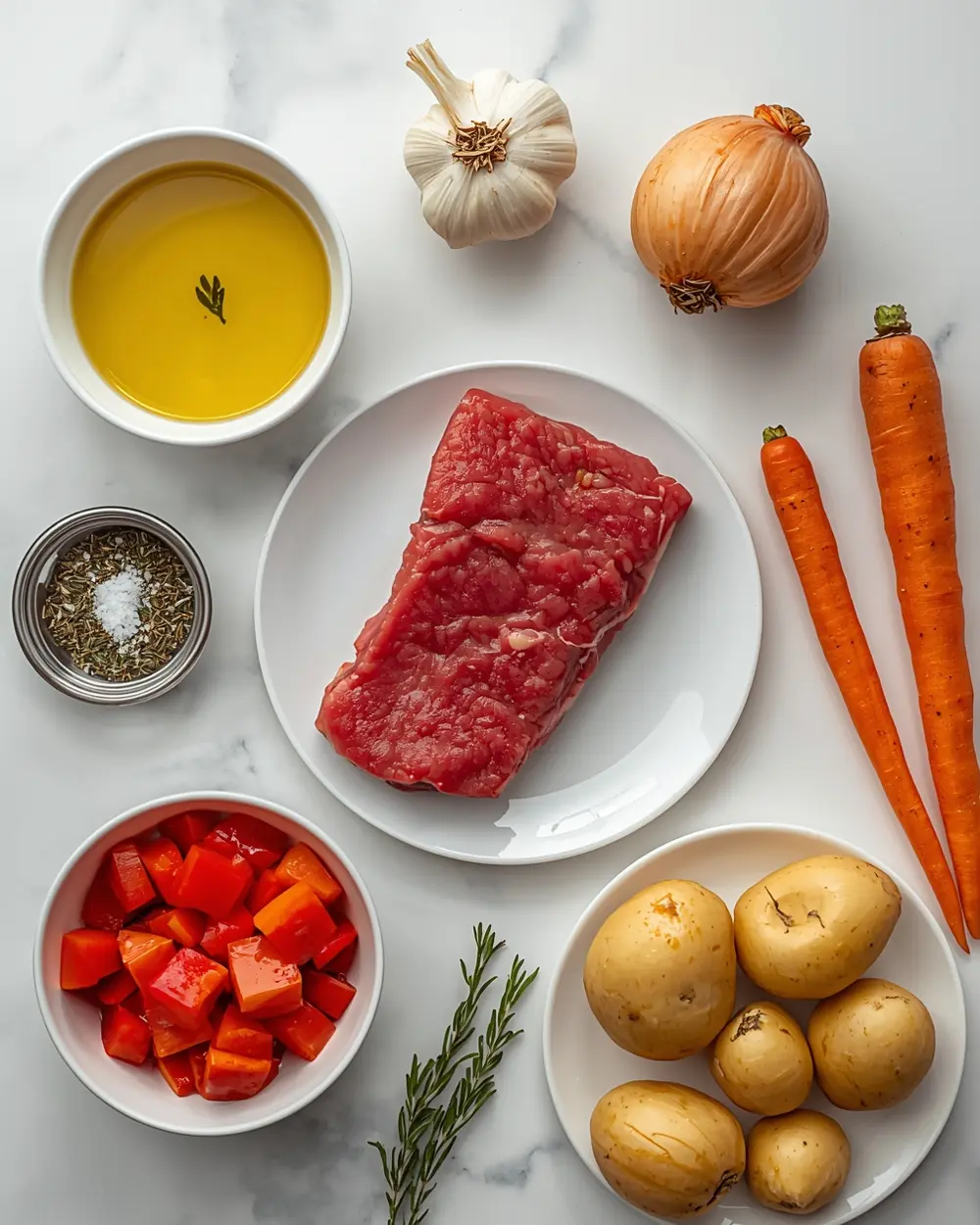
- 1 lb beef stew meat
- 2 tbsp olive oil
- 1 large onion, chopped
- 3 cloves garlic, minced
- 3 carrots, sliced
- 2 potatoes, cubed
- 1 cup diced tomatoes
- 6 cups low-sodium beef broth
- 1 tsp dried thyme
- 1 tsp dried rosemary
- 1 tsp salt
Want to swap out vegetables? Honestly, this vegetable beef soup recipe is super flexible—I’ve thrown in zucchini, green beans, and bell peppers without any issues. Just keep the potatoes and carrots as your base since they hold up best to the long cooking time.
Don’t skip browning the beef at the beginning (I know it adds a step). That golden crust creates the foundation for the whole soup’s flavor, and it only takes about five minutes. Trust me on this one.
Step-by-step instructions
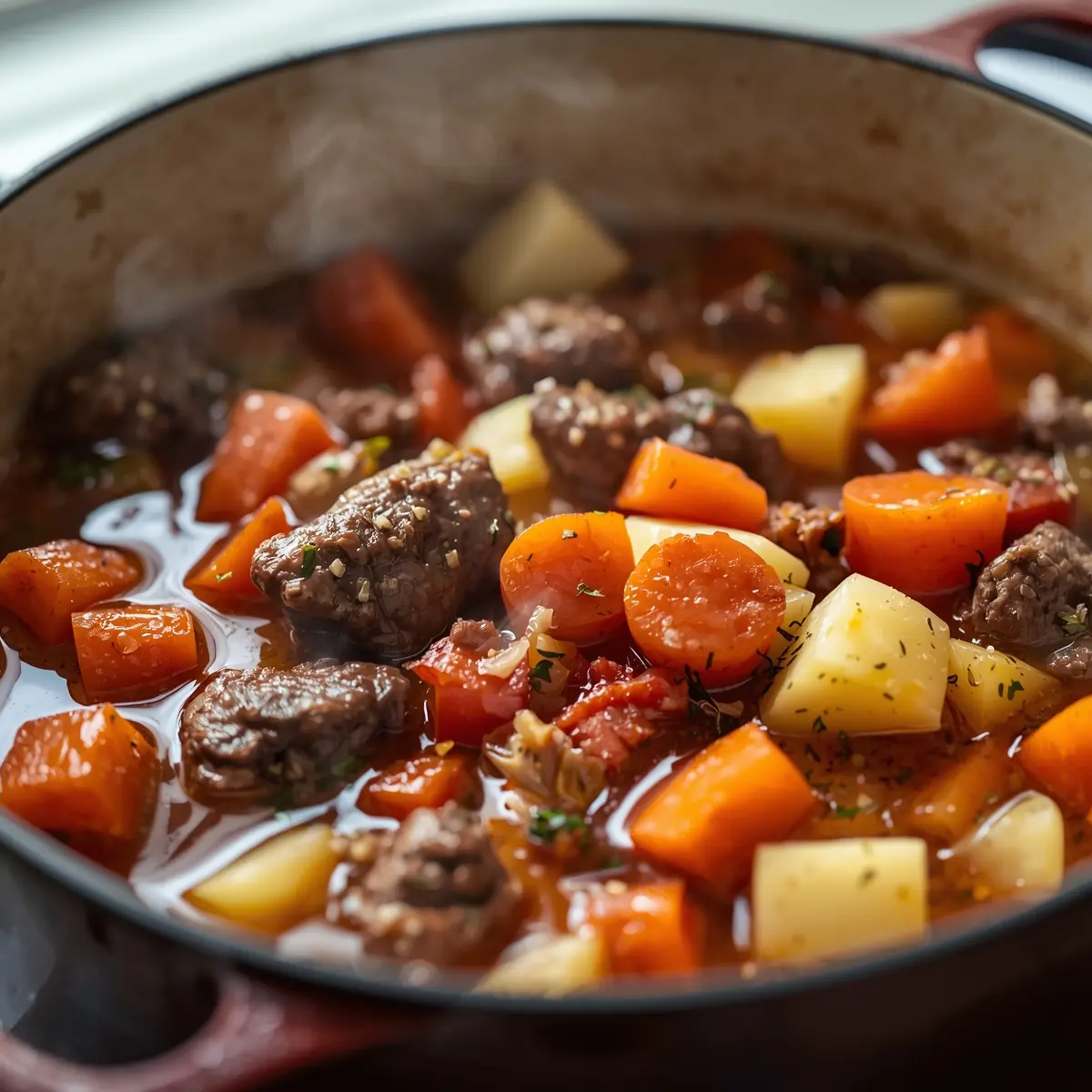
1. Heat olive oil in a large pot over medium-high heat until it shimmers slightly. Add your beef stew meat in a single layer and let it sit for three to four minutes without stirring—you want that nice brown crust. Flip each piece and cook another three minutes until browned on both sides. Don’t panic if some pieces stick a little; that’s actually the good stuff.
2. Push the beef to the side and add your chopped onion to the pot. Cook for two minutes, stirring occasionally, until the onion starts turning translucent. Add minced garlic and stir constantly for about 30 seconds until it gets fragrant. This whole step takes maybe three minutes, and it’s worth every second.
3. Pour in your beef broth and use a wooden spoon to scrape up any brown bits stuck to the bottom of the pot (that’s pure flavor). Add the diced tomatoes and stir everything together. Bring it to a gentle boil, then reduce heat to low and add your dried thyme and rosemary. Let it simmer for about 30 minutes so the beef starts getting tender.
4. After 30 minutes, add your sliced carrots and cubed potatoes to the pot. Give everything a good stir and add your salt. The broth should cover most of the vegetables; if it doesn’t, add a little water. Let it keep simmering on low heat for about 35 to 40 minutes until the potatoes are fork-tender.
5. Taste your vegetable beef soup recipe and adjust the seasoning as you go. Sometimes mine needs an extra half-teaspoon of salt or a bit more thyme—every stove cooks differently. If it tastes a little flat, try adding a splash of Worcestershire sauce (seriously, game-changer move).
6. Once the potatoes are completely soft and the beef is tender enough to break apart easily, your soup is done. The whole cooking time is about 1 hour and 15 minutes from start to finish. Mine always looks slightly thicker the next day because the potatoes keep absorbing liquid, and that’s completely normal.
7. Ladle into bowls and serve hot. I like to let it cool for about two minutes before eating since it gets super hot. If you’re prepping ahead, let it cool completely before transferring to storage containers.
Serving ideas for vegetable beef soup recipe
This hearty soup dinner tastes amazing on its own, but here are my favorite ways to round it out:
Crusty bread and butter
A thick slice of toasted bread with salted butter is honestly all you need alongside this. It soaks up the broth perfectly and makes the meal feel more complete. Plus, kids will actually eat vegetables when they’re focused on dunking bread.Simple salad pairing
A light green salad with vinaigrette cuts through the richness and balances your plate. Stick with something crisp like arugula or mixed greens. This combination works great for comfort food soup easy weeknight dinners when you want something hearty but not heavy.Cheese and crackers
Crusty crackers with a side of cheddar or parmesan cheese add a nice salty crunch. Sprinkle cheese directly into your hot bowl and watch it melt into the broth. My 6-year-old ate three helpings last Tuesday when I served it this way.Pro tips for perfect vegetable beef soup recipe
Storage tips
– Refrigerate in airtight containers for up to four days – Label your containers with the date so you don’t forget them – Cool completely before storing to prevent condensation and bacteria growthMake-ahead instructions
– Prep all your vegetables the night before and store separately – Brown the beef ahead of time and refrigerate until ready to cook – This soup tastes even better the second day once flavors have time to meldVariations
– Add one can of diced green beans during the last 15 minutes of cooking – Swap beef stew meat for ground beef if you prefer a different texture – Stir in one cup of diced sweet potato for a slightly different flavor profileTroubleshooting
– If your soup looks too watery at the end, mix one tablespoon cornstarch with two tablespoons water and stir it in – Soup tastes bland? You probably need more salt—add it gradually and taste after each addition – Beef still tough after cooking time? Check that your heat is low enough; high heat makes meat chewy instead of tenderFrequently asked questions
Can I freeze vegetable beef soup recipe?
Absolutely, this freezes beautifully for up to three months. Let it cool completely, then transfer to freezer bags or airtight containers, leaving about an inch of space at the top since it expands when frozen. Thaw overnight in the refrigerator and reheat gently on the stovetop until it reaches 165°F.
What’s the best beef cut to use?
Beef stew meat is your best choice because it’s designed to get tender during long cooking. I’ve tried chuck roast cut into chunks and it works perfectly too. Avoid lean cuts like sirloin since they get tough and stringy instead of falling apart.
How do I reheat leftover beef vegetable soup?
Pour it into a pot and reheat over medium-low heat, stirring occasionally until it reaches 165°F (usually about 10 to 12 minutes). You can also microwave individual bowls for two to three minutes, but the stovetop method tastes fresher. Add a splash of broth if it’s gotten too thick.
Can I make this in a slow cooker?
Yes, totally. Brown the beef first in a skillet, then transfer everything to your slow cooker with the broth and seasonings. Cook on low for six to eight hours, adding the vegetables during the last two hours. The slow cooker version is even more hands-off than stovetop cooking.
Final thoughts
This one pot meal delivers comfort without the fuss, and honestly, it’s become a staple at our house. The beauty is you can make it Sunday and have dinner basically solved through Wednesday night.
Your family will actually ask you to make this again (mine does constantly). Save this recipe for your next busy weeknight when you need something filling fast.
Pin this vegetable beef soup recipe for later and give it a try this week—you’ve got nothing to lose and a seriously delicious dinner to gain.
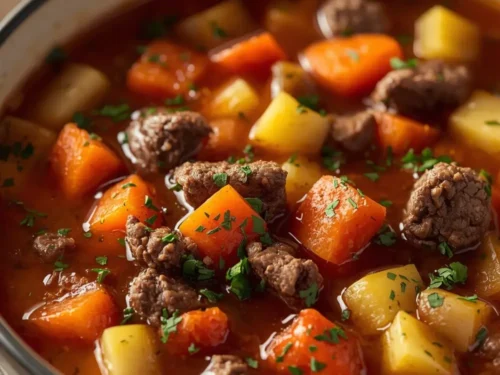
Vegetable Beef Soup Hearty and Full of Goodness
Ingredients
Method
- Heat olive oil in a large pot over medium-high heat until it shimmers slightly. Add your beef stew meat in a single layer and let it sit for three to four minutes without stirring—you want that nice brown crust. Flip each piece and cook another three minutes until browned on both sides. Don’t panic if some pieces stick a little; that’s actually the good stuff.
- Push the beef to the side and add your chopped onion to the pot. Cook for two minutes, stirring occasionally, until the onion starts turning translucent. Add minced garlic and stir constantly for about 30 seconds until it gets fragrant. This whole step takes maybe three minutes, and it’s worth every second.
- Pour in your beef broth and use a wooden spoon to scrape up any brown bits stuck to the bottom of the pot (that’s pure flavor). Add the diced tomatoes and stir everything together. Bring it to a gentle boil, then reduce heat to low and add your dried thyme and rosemary. Let it simmer for about 30 minutes so the beef starts getting tender.
- After 30 minutes, add your sliced carrots and cubed potatoes to the pot. Give everything a good stir and add your salt. The broth should cover most of the vegetables; if it doesn’t, add a little water. Let it keep simmering on low heat for about 35 to 40 minutes until the potatoes are fork-tender.
- Taste your vegetable beef soup recipe and adjust the seasoning as you go. Sometimes mine needs an extra half-teaspoon of salt or a bit more thyme—every stove cooks differently. If it tastes a little flat, try adding a splash of Worcestershire sauce (seriously, game-changer move).
- Once the potatoes are completely soft and the beef is tender enough to break apart easily, your soup is done. The whole cooking time is about 1 hour and 15 minutes from start to finish. Mine always looks slightly thicker the next day because the potatoes keep absorbing liquid, and that’s completely normal.
- Ladle into bowls and serve hot. I like to let it cool for about two minutes before eating since it gets super hot. If you’re prepping ahead, let it cool completely before transferring to storage containers.