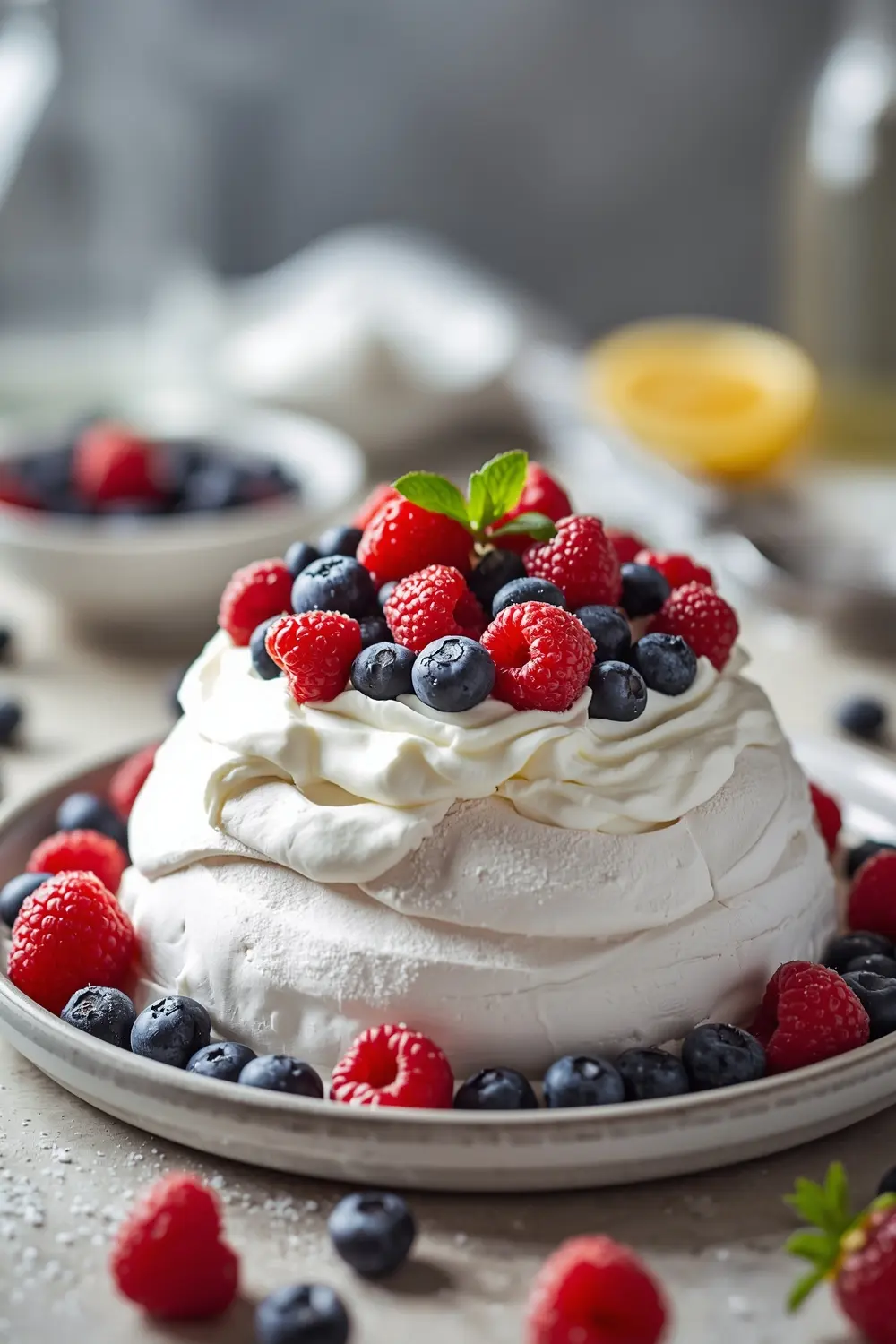
Easter pavlova recipe is honestly the easiest way to look like you spent all day in the kitchen when you really didn’t. I’m talking 20 minutes of actual work, then let the oven do the heavy lifting.
This meringue dessert is basically crispy cloud magic topped with fresh berries and whipped cream. Ever had one of those nights where you need something elegant but don’t have energy to fuss? That’s exactly what this is for.
Plus, it’s so pretty sitting on the table that guests always ask for the recipe. If you’re looking for an Easter dessert ideas elegant enough to impress but simple enough to pull off, bookmark this for meal prep day. Need more spring inspiration? Check out lemon desserts for spring entertaining too.
Why this Easter pavlova recipe works
Know what makes the difference between a flat meringue disaster and a gorgeous crispy masterpiece? The cream of tartar and cornstarch are your secret weapons here. I’ve made this exact Easter pavlova recipe at least a dozen times, and it never fails when you follow these steps.
- Crispy exterior, marshmallow interior — that perfect texture contrast happens every single time
- Ready in under 2 hours from start to finish, making it weeknight-friendly
- Naturally elegant without any fancy decorating skills required
- Uses simple pantry staples you probably already have at home
| Prep Time | Cook Time | Calories | Servings | Cuisine |
|---|---|---|---|---|
| 20 minutes | 1 hour 30 minutes | 165 per serving | 6 servings | Australian |
Ingredients for Easter pavlova recipe
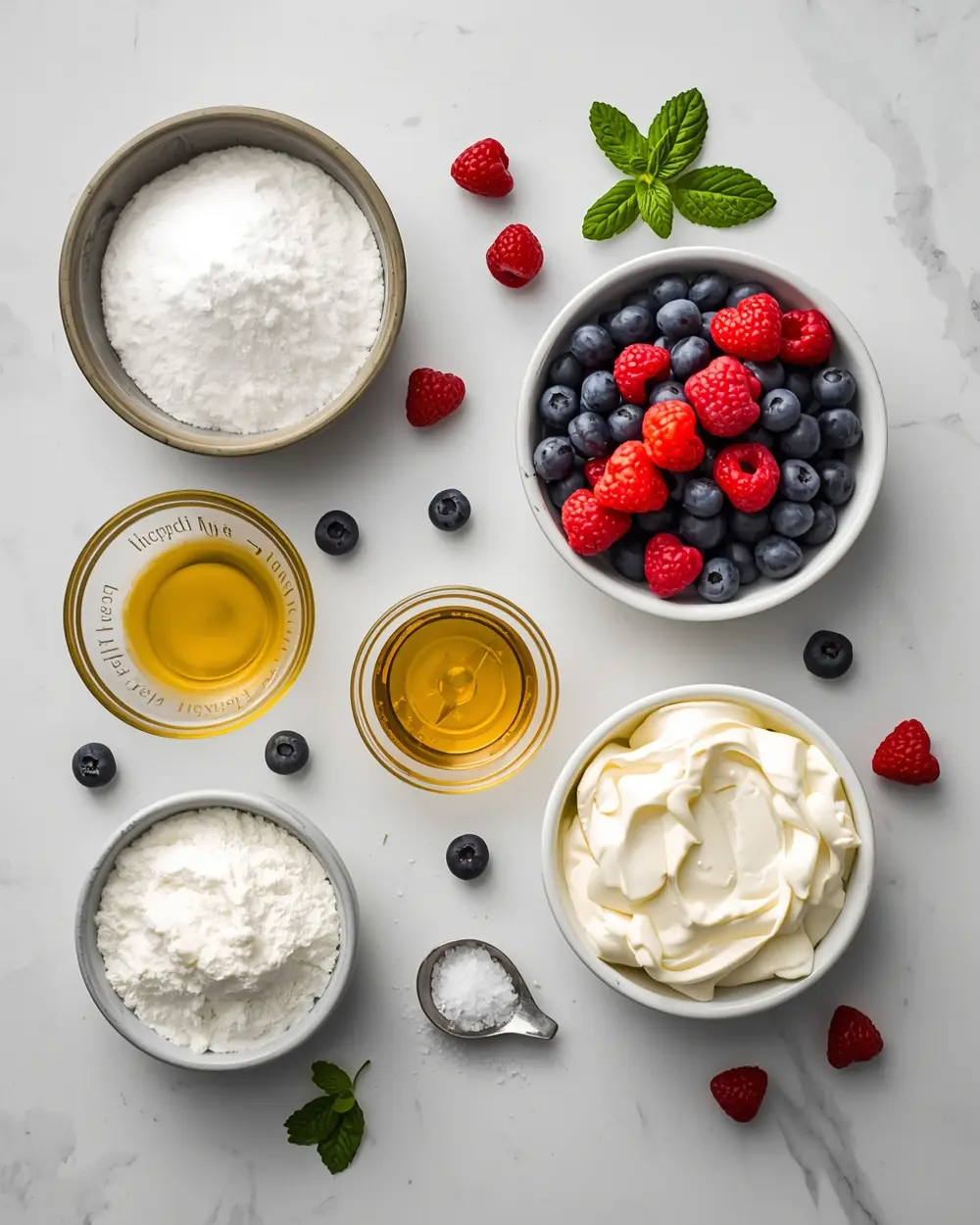
- 2 egg whites
- 1/2 cup caster sugar
- 1 tsp cream of tartar
- 1 tsp vanilla bean paste
- 1 tbsp cornstarch
- 1/4 tsp salt
- 1/2 cup heavy cream
- 1 tbsp powdered sugar
- 1 cup mixed berries
- 1 tsp agar-agar powder
- 1 tbsp lemon juice
- 1 tbsp chopped mint
Can’t find caster sugar? Regular granulated works but the texture shifts a little bit. I’ve tested it both ways, and caster sugar gives you that signature crispy-on-outside vibe that makes this Easter pavlova recipe stand out.
Skip the agar-agar if you want something simpler — the berries taste amazing without it. Don’t panic if cream of tartar sounds fancy because it’s just a stabilizer that stops your meringue from weeping. Honestly, this ingredient list is way shorter than most show stopper dessert recipes you’ll find.
Step-by-step instructions
1. Preheat your oven to 300°F and line a baking sheet with parchment paper. Make sure your bowl is completely dry — any water will sabotage your meringue before you even start. I learned this the hard way when I grabbed a slightly damp bowl once and spent 10 minutes wondering why nothing was whipping up.
2. Add your 2 egg whites, salt, and cream of tartar to the bowl and beat on high speed for about 3-4 minutes until soft peaks form. You’ll see the mixture get fluffy and white, which is exactly what you want. Stop and check by lifting the beaters — peaks should curl over gently.
3. Gradually add the 1/2 cup caster sugar while the mixer runs, adding it a tablespoon at a time over the next 5 minutes. This slow process prevents graininess and gives you that glossy, stiff-peak meringue. Once you’re done, the mixture should look shiny and hold stiff peaks that don’t fold over.
4. Gently fold in the vanilla bean paste and cornstarch using a spatula, being careful not to deflate all that beautiful air you just created. This is where you want to be gentle — think folding, not stirring. I usually do about 8-10 gentle folds until it’s just combined.
5. Spoon the meringue onto your prepared baking sheet in a rough circle about 8 inches across, creating a slight well in the center with the back of a spoon. The well is key because it’s where you’ll pile your berries and cream later. This Easter pavlova recipe looks more rustic than perfect, and honestly that’s the whole charm.
6. Bake for 90 minutes at 300°F, then turn off the oven and crack the door open slightly (prop it with a wooden spoon works great). Let it sit inside for another 30 minutes while the oven cools. This slow cooling prevents cracks from forming across the top — don’t skip this part because it actually works.
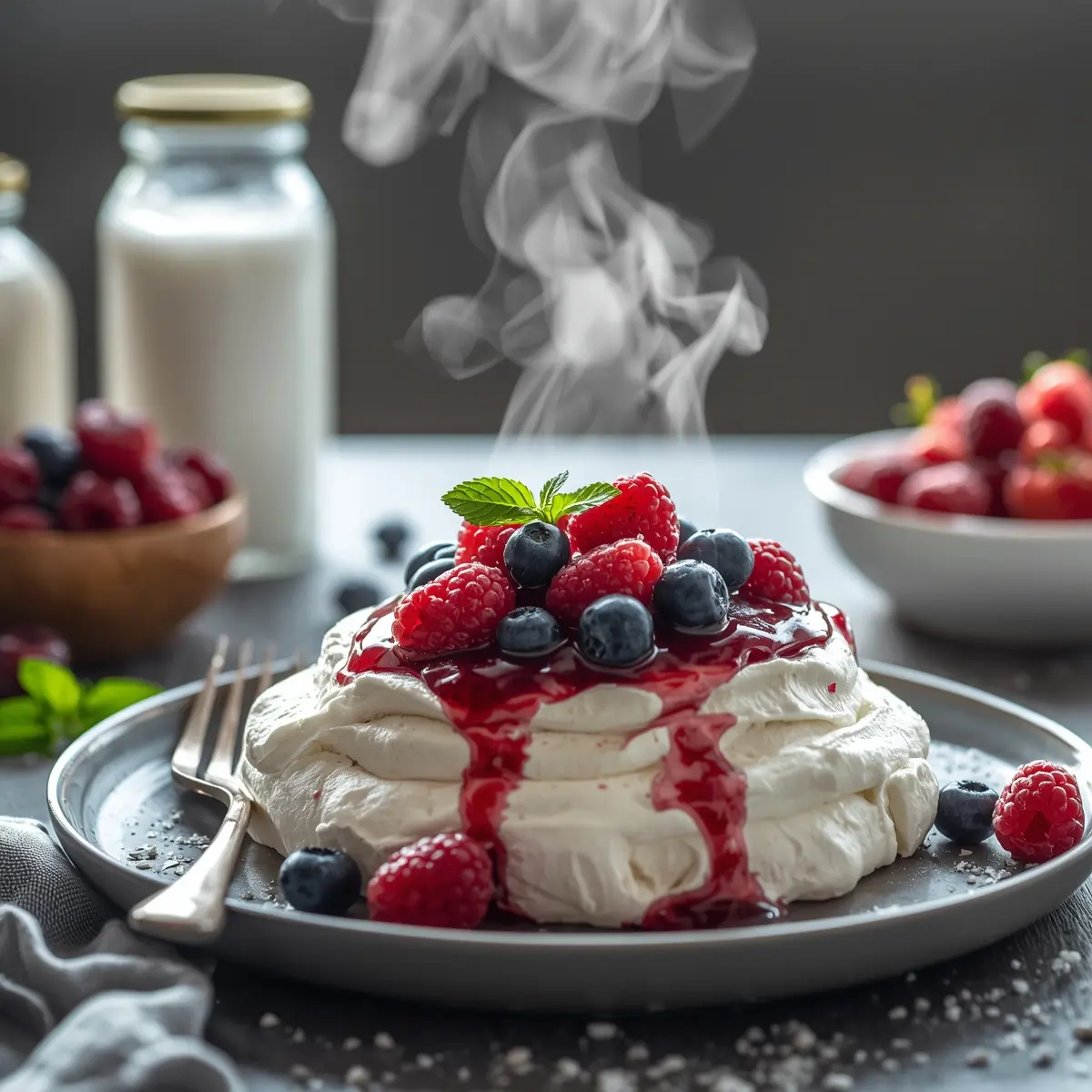
7. Remove and cool completely on the baking sheet for at least 30 minutes before transferring to your serving plate. Whip the heavy cream with powdered sugar and vanilla until soft peaks form, then top the cooled meringue with cream and your mixed berries. Drizzle lemon juice over the berries, add the agar-agar powder if using, and scatter mint on top right before serving.
Serving ideas for Easter pavlova recipe
Your crispy meringue base is basically a blank canvas for any flavor combination you’re craving.
Classic Lemon Berry Pavlova
Lemon and berries are naturally made for each other, making this the traditional pairing everyone loves. The tartness cuts through the sweetness perfectly, and the brightness feels totally spring-appropriate. This combo never fails to get compliments at the table.Cream Cheese Mascarpone Topping
Swap half the whipped cream for mascarpone mixed with a little honey for a richer, creamier texture. The tang balances the crispy meringue in the best way possible. I personally think this tastes better the next day when the flavors meld together slightly.Chocolate Drizzle Version
Melt dark chocolate and drizzle it over the top along with your berries for an elegant twist on the traditional berry topped dessert. Add crushed pistachios if you want extra crunch and color. For more chocolate inspiration, check out chocolate desserts for spring entertaining and level up your menu.Pro tips for perfect Easter pavlova recipe
Storage tips
– Keep your finished pavlova in an airtight container up to 2 days at room temperature – Don’t refrigerate because moisture will make the meringue sticky and soft – Add berries and cream just before serving, not hours ahead of timeMake-ahead instructions
– Bake the meringue base up to 3 days in advance and store in an airtight container – Prepare berries and whipped cream separately the morning of serving – Assemble everything 30 minutes before guests arrive for maximum crispinessVariations
– Try passion fruit curd instead of fresh berries for a tropical twist on this show stopper dessert – Make mini individual pavlovas using a piping bag for elegant individual servings – Swap berries for stone fruits like peaches in summer months – Use Greek yogurt thinned with a little honey instead of heavy cream for lightnessTroubleshooting
– If your meringue cracks during baking, don’t panic — the cracks add rustic charm and nobody notices once berries are on top – Weeping meringue (watery liquid) means humidity got involved — the slow cooling step prevents this – If it won’t stiffen up, your bowl had oil residue — always use spotlessly clean equipmentFrequently asked questions
How far ahead can you make Easter pavlova recipe?
You can bake the meringue base up to 3 days ahead and store it in an airtight container at room temperature. The key is keeping it dry and away from humidity, which makes the crispy exterior get sticky and soft. Add your whipped cream and berries no more than 30 minutes before serving for the best texture.
Can you freeze an Easter pavlova recipe?
Freezing isn’t ideal because moisture forms when it thaws, which ruins the crispy texture you worked hard to create. Your best bet is baking the meringue a few days ahead and keeping it at room temperature instead. This way you get maximum crispiness when you serve it.
What’s the difference between this meringue dessert and a regular meringue cookie?
The cream of tartar and cornstarch combo in this Easter pavlova recipe creates a thicker, chewier interior while keeping the outside crispy. Regular meringue cookies are typically baked longer at lower temperatures to dry them out completely. This version intentionally stays slightly soft in the middle, which is the whole point.
Why won’t my berry topped dessert hold its shape?
If your meringue spreads or collapses, your egg whites probably had any fat or yolk mixed in, or your bowl wasn’t completely clean. Start fresh with new eggs and wash your mixing bowl with hot soapy water, then dry it completely. This berry topped dessert needs perfectly clean equipment to work right.
Final thoughts
This Easter pavlova recipe proves you don’t need hours in the kitchen to create something truly impressive and elegant. The meringue magic happens in the oven while you kick back, then you just add berries and cream at the end.
Your guests will think you’re a baking wizard when really you just followed a few simple steps. This spring meringue dessert has become my go-to whenever I need something beautiful fast.
Want more elegant Easter dessert ideas? Head over to spring entertaining dessert recipes for inspiration on building your whole menu. Pin this Easter pavlova recipe for your next gathering — honestly, you’re going to make it again and again.
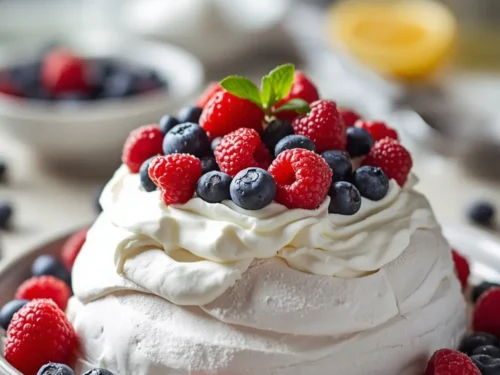
Easter Pavlova Light Crisp and Topped With Berries
Ingredients
Method
- Preheat your oven to 300°F and line a baking sheet with parchment paper. Make sure your bowl is completely dry — any water will sabotage your meringue before you even start. I learned this the hard way when I grabbed a slightly damp bowl once and spent 10 minutes wondering why nothing was whipping up.
- Add your 2 egg whites, salt, and cream of tartar to the bowl and beat on high speed for about 3-4 minutes until soft peaks form. You’ll see the mixture get fluffy and white, which is exactly what you want. Stop and check by lifting the beaters — peaks should curl over gently.
- Gradually add the 1/2 cup caster sugar while the mixer runs, adding it a tablespoon at a time over the next 5 minutes. This slow process prevents graininess and gives you that glossy, stiff-peak meringue. Once you’re done, the mixture should look shiny and hold stiff peaks that don’t fold over.
- Gently fold in the vanilla bean paste and cornstarch using a spatula, being careful not to deflate all that beautiful air you just created. This is where you want to be gentle — think folding, not stirring. I usually do about 8-10 gentle folds until it’s just combined.
- Spoon the meringue onto your prepared baking sheet in a rough circle about 8 inches across, creating a slight well in the center with the back of a spoon. The well is key because it’s where you’ll pile your berries and cream later. This Easter pavlova recipe looks more rustic than perfect, and honestly that’s the whole charm.
- Bake for 90 minutes at 300°F, then turn off the oven and crack the door open slightly (prop it with a wooden spoon works great). Let it sit inside for another 30 minutes while the oven cools. This slow cooling prevents cracks from forming across the top — don’t skip this part because it actually works.
- Remove and cool completely on the baking sheet for at least 30 minutes before transferring to your serving plate. Whip the heavy cream with powdered sugar and vanilla until soft peaks form, then top the cooled meringue with cream and your mixed berries. Drizzle lemon juice over the berries, add the agar-agar powder if using, and scatter mint on top right before serving.