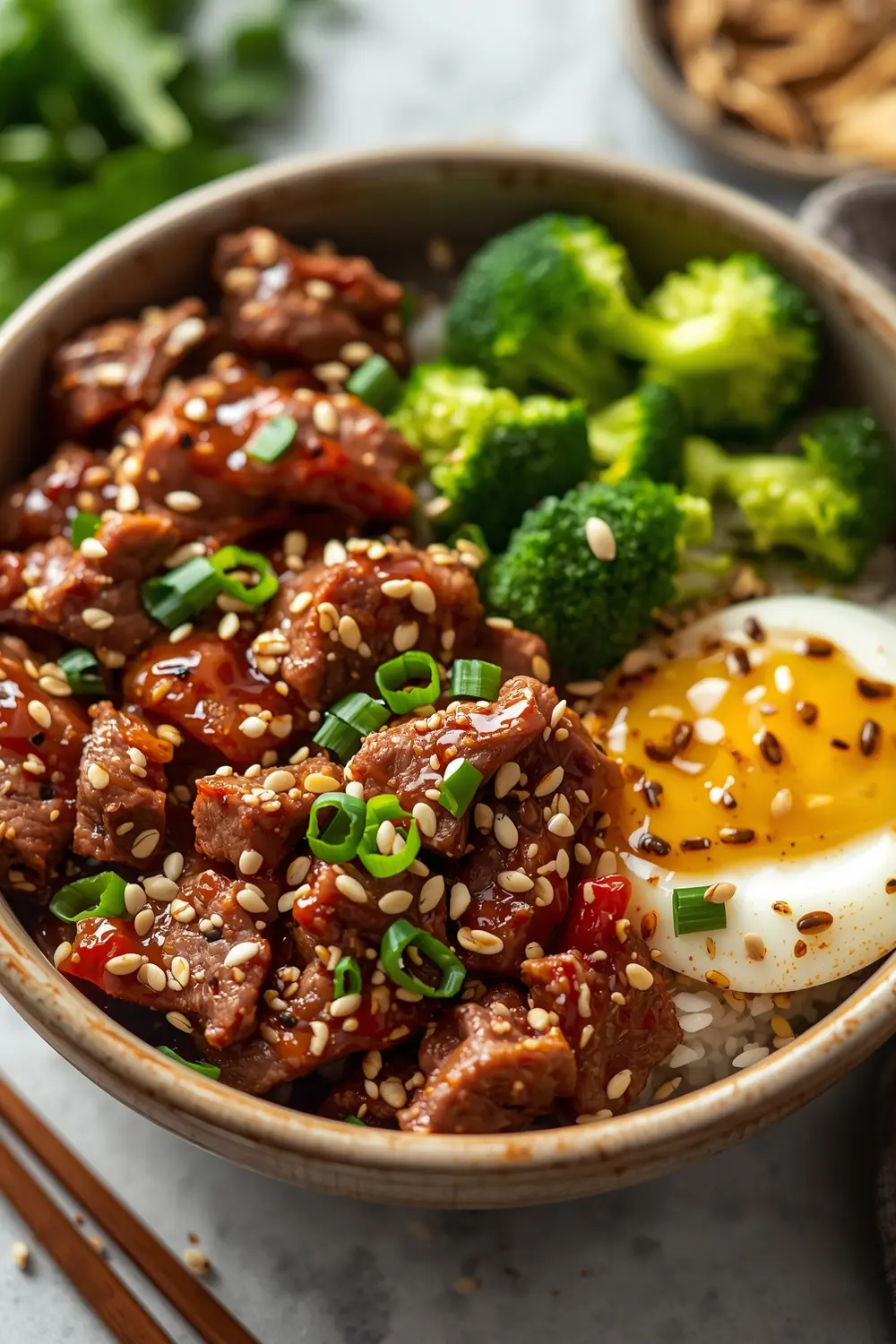
Korean beef bowls recipe hits different on a busy weeknight—you get restaurant-quality flavor without the takeout wait. I’m talking sweet, spicy, and totally craveable in just 20 minutes flat.
Want something that’ll make your family ask for seconds? This Asian rice bowl dinner comes together faster than you’d expect.
If you’ve been stuck in a dinner rut, bookmark this for meal prep day. It’s also perfect for meal planning since the components store separately, and I’ve got all the tricks to make it even easier. Check out our quick dinner exotic recipes for more weeknight inspiration.
Why this Korean beef bowls recipe works
Ever had one of those nights where you’re starving but don’t wanna spend an hour cooking? That’s exactly why I created this quick dinner exotic option—it’s genuinely fast and actually tastes authentic. I burned my first batch because I walked away for 2 minutes, so trust me when I say the timing matters here.
- Ready in just 20 minutes total, perfect for busy weeknights
- Sweet, spicy sauce coats every bite beautifully without being overwhelming
- Ground beef bowl recipe that works for meal prep or everyday dinner
- Minimal cleanup because you’re using one skillet plus a rice cooker
| Prep Time | Cook Time | Calories | Servings | Cuisine |
|---|---|---|---|---|
| 10 minutes | 10 minutes | 425 per serving | 4 servings | Korean |
Ingredients for Korean beef bowls recipe
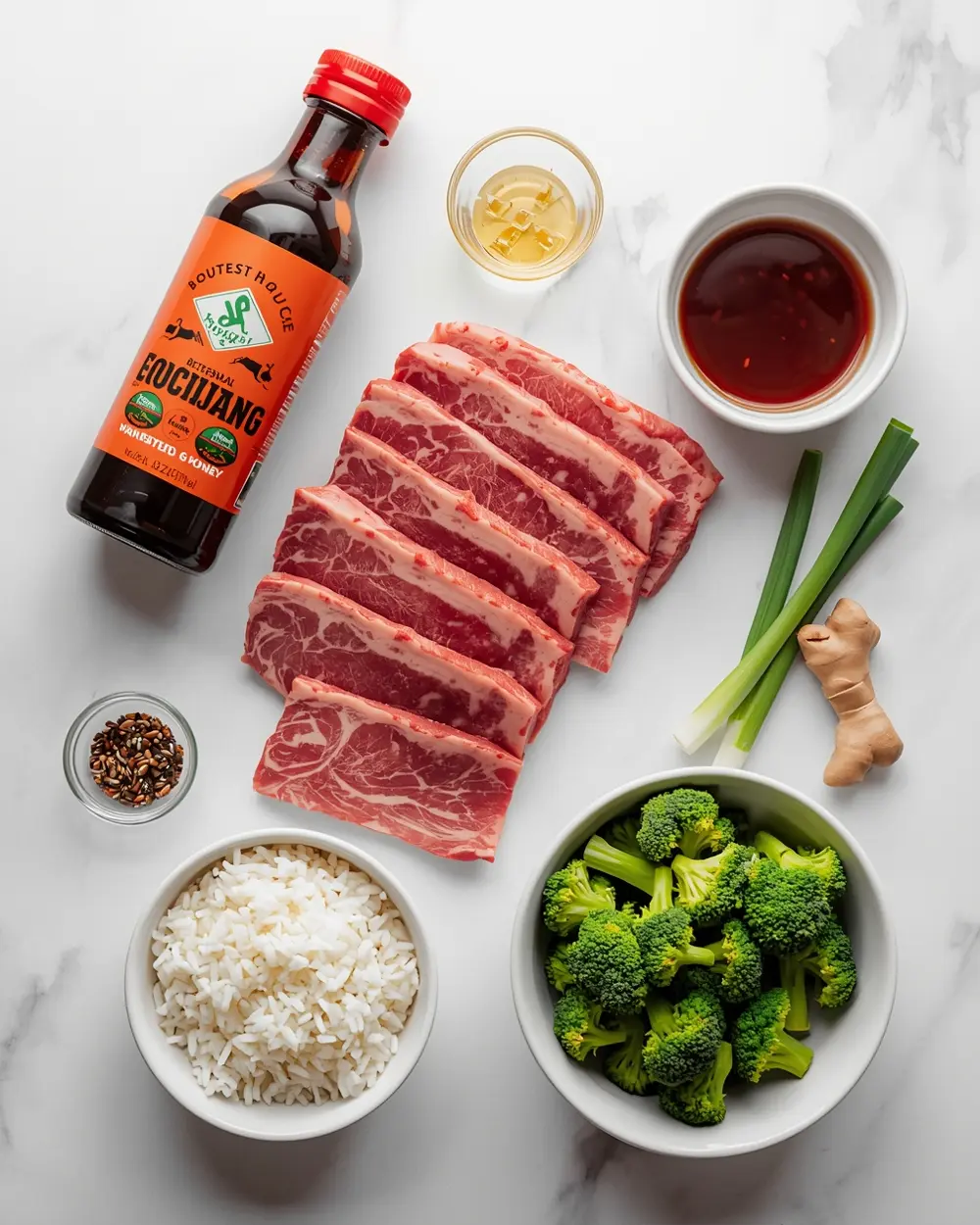
- 500 g beef strips
- 2 tbsp gochujang
- 1 tbsp soy sauce
- 1 tbsp honey
- 1 tsp minced garlic
- 1 tsp minced ginger
- 1 tbsp sesame oil
- 1 cup cooked rice
- 1 tbsp toasted sesame seeds
- 2 green onions, sliced
- 1 cup broccoli florets
- 1 tbsp vegetable oil
Don’t have gochujang? Honestly, it’s worth buying—you’ll use it for other Korean beef recipe variations and stir-fries. You can sub it with sriracha mixed with a little brown sugar, but the flavor won’t be quite as authentic (not gonna lie, I tried it once).
For the beef strips, I personally use sirloin because it’s tender but won’t break your budget. Ground beef totally works here too if that’s what you’ve got—just reduce the cook time by about 2 minutes.
Step-by-step instructions
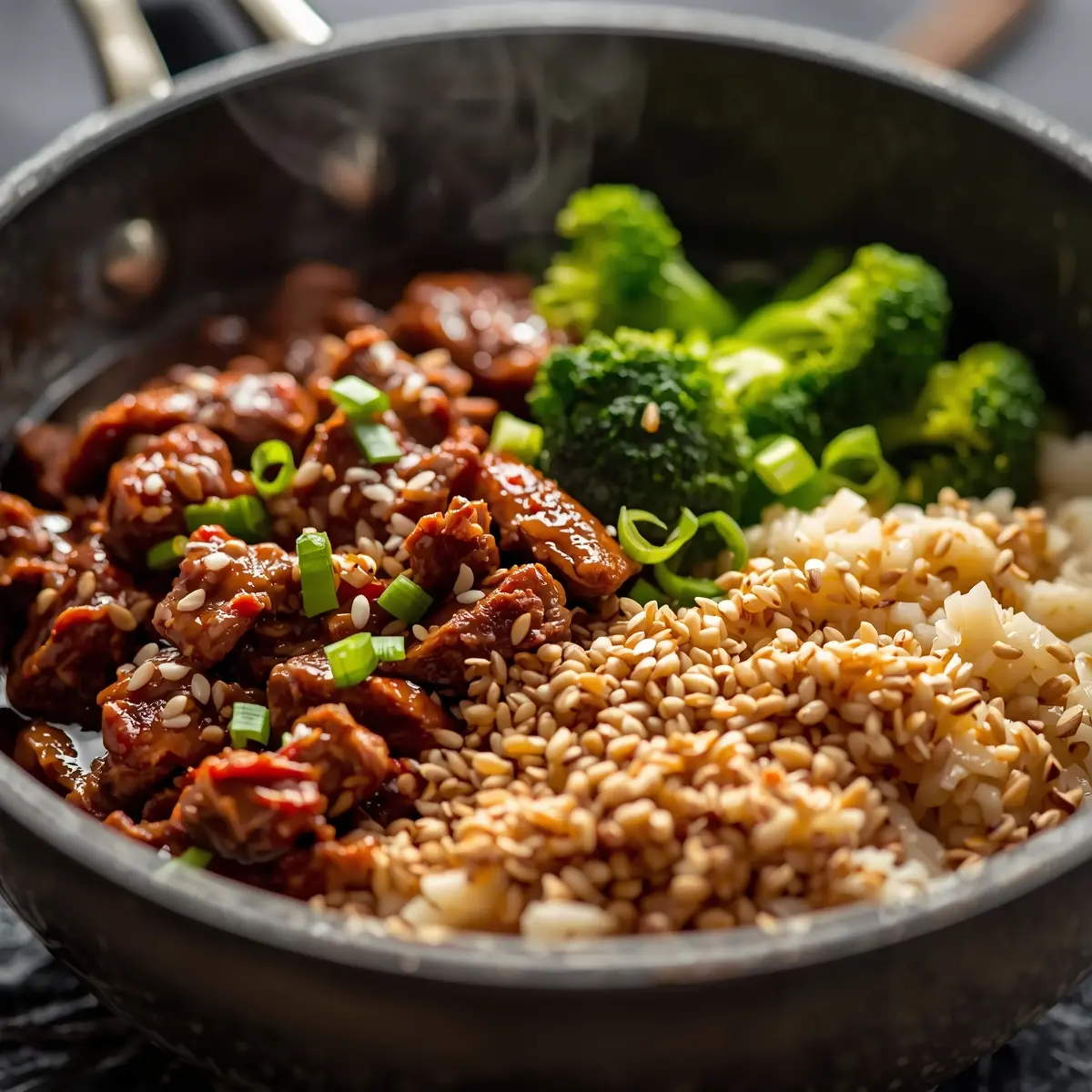
1. Mix gochujang, soy sauce, honey, garlic, ginger, and sesame oil in a small bowl until smooth. This creates your Korean beef bowls recipe sauce—don’t skip this step because pre-mixing prevents lumpy gochujang. The sauce should look kinda thick and glossy, almost like a thick paste. Taste it and adjust sweetness or spice to your preference.
2. Heat vegetable oil in a large skillet over medium-high heat for about 1 minute. You want it shimmering but not smoking—I can tell it’s ready when it moves around super fast in the pan. This takes longer than you’d think if you’re coming from electric burners.
3. Add beef strips and sear for 3-4 minutes without stirring constantly. Let them get that golden crispy edge—you’ll hear it sizzle when you first add them. Break them up with your spoon and cook until mostly browned, another 2-3 minutes.
4. Pour the sauce over the cooked beef and stir everything together. The beef will sizzle when the sauce hits the hot pan—that’s exactly what you want. Cook for 1-2 minutes, stirring occasionally, until the sauce thickens and coats the meat. The kitchen smells amazing at this point.
5. Add broccoli florets to the skillet alongside the beef. Don’t panic if it looks watery at first—it thickens up fast, usually within 30 seconds. Stir everything together and cook for 2-3 minutes until the broccoli’s tender-crisp. I like mine with just a tiny bit of bite still left, not mushy.
6. Divide cooked rice among 4 bowls and top with the beef mixture. Sprinkle toasted sesame seeds and sliced green onions over the top. This is where it all comes together—the rice absorbs those saucy flavors so well. Make sure you get some sauce in every spoonful.
7. Serve immediately while everything’s still warm. If you’re doing meal prep, store components separately—rice in one container, beef mixture in another. This keeps everything fresh and lets you customize each bowl when you’re ready to eat. The flavors actually get better after a day in the fridge.
Serving ideas for Korean beef bowls recipe
Make these Asian rice bowl dinners even better with simple pairings.
Crispy fried onions topping
Add a handful of crispy fried onions right before eating for texture contrast. They stay crunchy even when the sauce hits them, adding that satisfying crunch you didn’t know you needed. This simple addition makes the whole bowl feel more special.Pickled cucumber side
Serve with quick-pickled cucumber slices to balance the sweet spicy dinner flavors. The tang cuts through the richness beautifully and cleanses your palate between bites. I always make extra because my family steals it. Check out our Asian rice bowl dinner sides for more pairing ideas.Soft-boiled egg on top
Crack a soft-boiled egg onto your Korean beef bowls recipe while it’s still steaming. The runny yolk mixes with the sauce and makes everything extra creamy and rich. My 6-year-old ate three helpings last Tuesday when I added the egg.Pro tips for perfect Korean beef bowls recipe
Storage tips
– Keep cooked beef separate from rice for up to 4 days – Store sesame seeds in an airtight container at room temperature – Broccoli stays freshest when stored separately from the sauceMake-ahead instructions
– Prep the sauce the night before and store in the fridge – Cook beef strips up to 2 days ahead, then reheat gently – Pre-slice all vegetables and store in containers for quick assemblyVariations
– Swap beef for chicken breast or ground beef for different textures – Add mushrooms or carrots for extra vegetables – Use cauliflower rice to make it lower-carb friendlyTroubleshooting
– If sauce is too thin, simmer 1-2 minutes longer to reduce – Beef too tough? You likely overcooked it—keep heat at medium-high max – Sauce separating? Whisk it back together and cook 30 seconds moreFrequently asked questions
Can I freeze Korean beef bowls recipe?
Yes, freeze the beef mixture in an airtight container for up to 3 months. *Thaw overnight in the fridge* and reheat gently in a skillet over medium heat for 3-4 minutes. Rice freezes separately in portions, then reheats in the microwave in about 2 minutes with a splash of water.What’s a good substitute for gochujang?
Sriracha mixed with a tablespoon of brown sugar works, though the flavor’s milder. Miso paste blended with a little red pepper flakes also gives you that umami kick. Neither’s quite the same, but they’re solid options when you can’t get to the store.How do I reheat leftovers?
Reheat the beef mixture in a skillet over medium heat for 3-4 minutes, stirring occasionally. *Don’t use the microwave for the beef* because it can dry out and get rubbery. Rice reheats fine in the microwave with just a tiny splash of water for 2 minutes.Can I make this without ginger?
Absolutely, just add another teaspoon of garlic instead. The ginger adds warmth and depth, so you’ll notice a slight difference. Honestly though, fresh ginger’s pretty affordable and keeps forever in your freezer.Final thoughts
These Korean beef bowls recipe servings come together so fast you’ll wonder why you don’t make them every week. The sweet spicy dinner vibes are totally craveable, and your family will actually ask for seconds (yes, really).
This quick dinner exotic option beats takeout any day for both flavor and cost. Plus you know exactly what’s going into each bowl. Drop a pin on this recipe for your next meal prep Sunday. Looking for more ground beef bowl recipe ideas? You’re gonna love our collection.
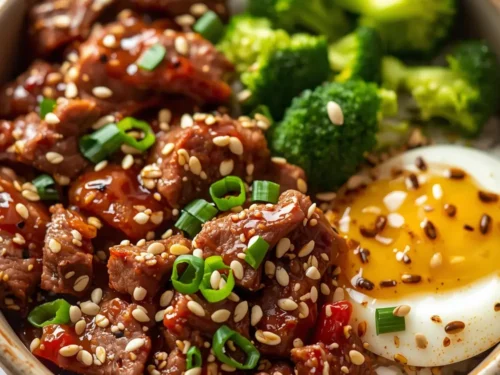
Korean Beef Bowls Sweet Spicy and Ready in 20 Min
Ingredients
Method
- Mix gochujang, soy sauce, honey, garlic, ginger, and sesame oil in a small bowl until smooth. This creates your Korean beef bowls recipe sauce—don’t skip this step because pre-mixing prevents lumpy gochujang. The sauce should look kinda thick and glossy, almost like a thick paste. Taste it and adjust sweetness or spice to your preference.
- Heat vegetable oil in a large skillet over medium-high heat for about 1 minute. You want it shimmering but not smoking—I can tell it’s ready when it moves around super fast in the pan. This takes longer than you’d think if you’re coming from electric burners.
- Add beef strips and sear for 3-4 minutes without stirring constantly. Let them get that golden crispy edge—you’ll hear it sizzle when you first add them. Break them up with your spoon and cook until mostly browned, another 2-3 minutes.
- Pour the sauce over the cooked beef and stir everything together. The beef will sizzle when the sauce hits the hot pan—that’s exactly what you want. Cook for 1-2 minutes, stirring occasionally, until the sauce thickens and coats the meat. The kitchen smells amazing at this point.
- Add broccoli florets to the skillet alongside the beef. Don’t panic if it looks watery at first—it thickens up fast, usually within 30 seconds. Stir everything together and cook for 2-3 minutes until the broccoli’s tender-crisp. I like mine with just a tiny bit of bite still left, not mushy.
- Divide cooked rice among 4 bowls and top with the beef mixture. Sprinkle toasted sesame seeds and sliced green onions over the top. This is where it all comes together—the rice absorbs those saucy flavors so well. Make sure you get some sauce in every spoonful.
- Serve immediately while everything’s still warm. If you’re doing meal prep, store components separately—rice in one container, beef mixture in another. This keeps everything fresh and lets you customize each bowl when you’re ready to eat. The flavors actually get better after a day in the fridge.