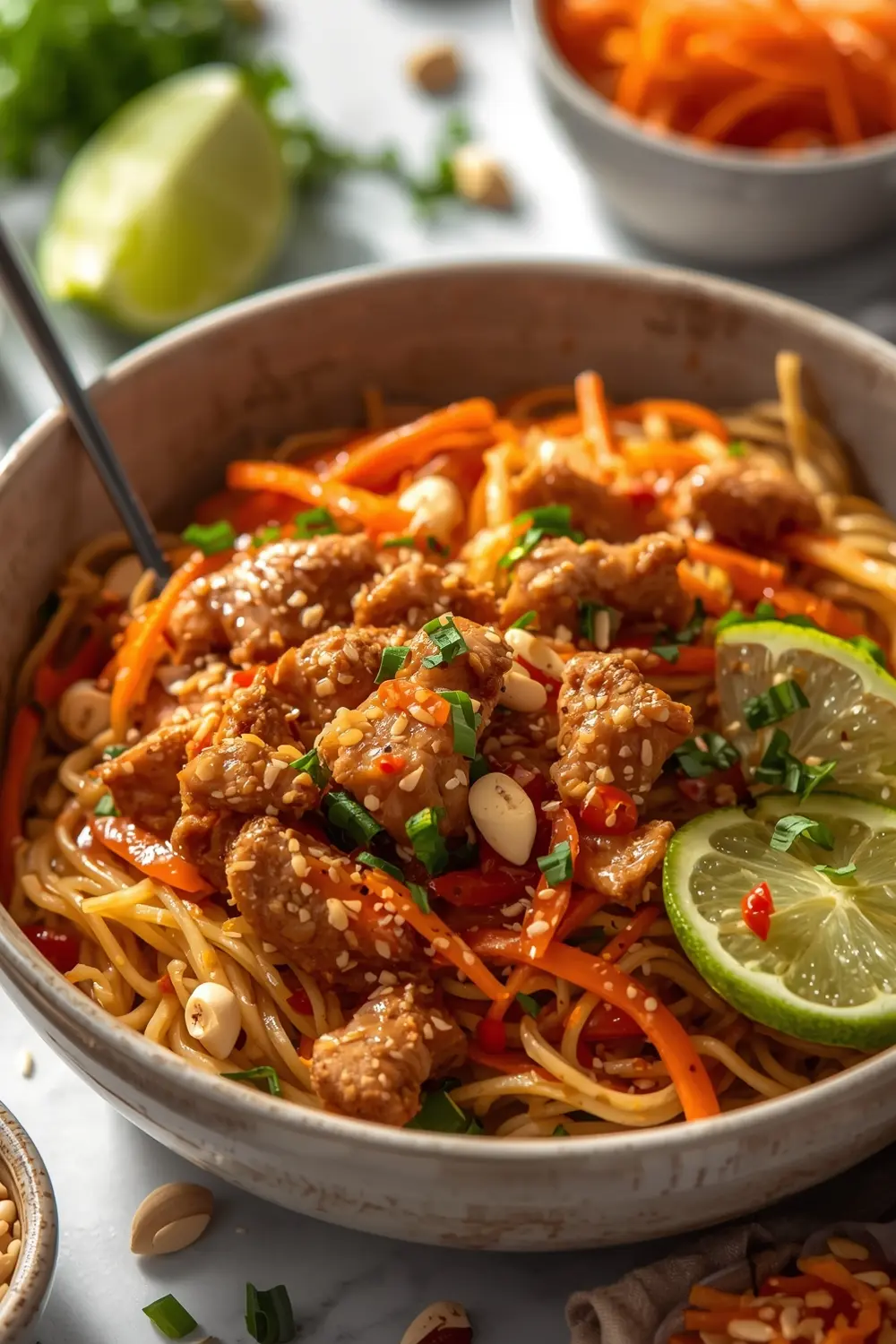
Most home cooks make Thai peanut noodles recipe way too dry—they dump the sauce on cold noodles and wonder why it clumps up. The trick is mixing your sauce while the noodles are still steaming hot, so it actually clings to every strand instead of pooling at the bottom.
Here’s the thing: you’ll know you’re doing it right when that warm, nutty aroma hits your kitchen the second you toss everything together. That’s the peanut butter fully blooming into the heat, not sitting there like paste. Save this for meal prep day because once you nail the timing, you’ll have a weeknight dinner that tastes like you ordered takeout.
I’ve made this probably a hundred times now, and the difference between mediocre and amazing comes down to one thing—temperature control. You want those noodles hot enough that the sauce coats them instantly but not so hot that the peanut butter breaks. It’s a narrow window, but honestly, it’s easier than it sounds.
If you’re craving something that feels restaurant-quality but takes less time than scrolling through delivery apps, this is it. You can also check out garlic butter shrimp for another quick Asian-inspired dinner option that works beautifully alongside these noodles.
Why most Thai peanut noodles recipe disappoint
Most versions fail because people either cool the noodles completely before saucing them, or they use peanut butter straight from the jar without tempering it first. Cold noodles plus thick peanut butter equals a clumpy, separated mess that tastes more like peanut paste than a cohesive sauce. The sauce needs heat to emulsify properly with the soy sauce and lime juice, creating that silky coating instead of a grainy texture.
Here’s what changes everything:
- Heat activates the peanut butter’s oils, making it flow smoothly instead of clumping
- Soy sauce and lime juice need warmth to bond with the fat, creating a stable emulsion
- Ginger and garlic release more flavor compounds when bloomed in hot liquid
- The noodles absorb sauce better at 160-170°F than when they cool to room temperature
Ingredients for Thai peanut noodles recipe
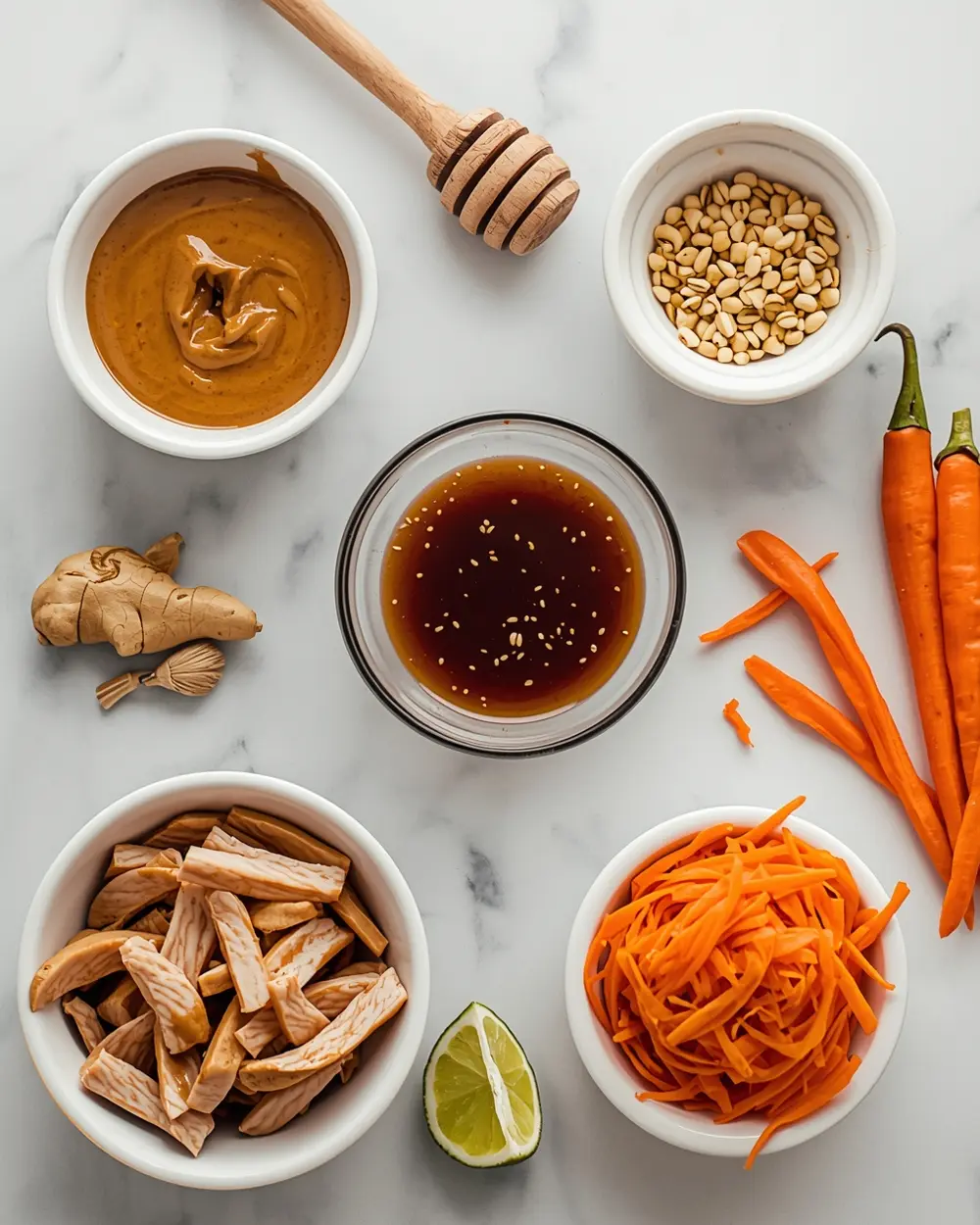
- 8 oz rice noodles
- 2 tbsp peanut butter
- 1 tbsp low-sodium soy sauce
- 1 tbsp honey
- 1 tbsp lime juice
- 1 tsp grated ginger
- 1 clove garlic, minced
- 1/2 tsp chili flakes
- 1/4 cup cooked chicken strips
- 1 tbsp chopped peanuts
- 1 tsp sesame oil
- 1/2 cup shredded carrots
The rice noodles are the star here—they’ve got this delicate, slightly chewy texture that holds sauce way better than regular pasta. You want them with just a tiny bit of bite when you drain them, because they’ll keep softening as the residual heat works on them. Don’t get the super-thin rice vermicelli unless you like them mushy; stick with the standard thickness for Thai peanut noodles recipe that actually has some structure.
Step-by-step instructions
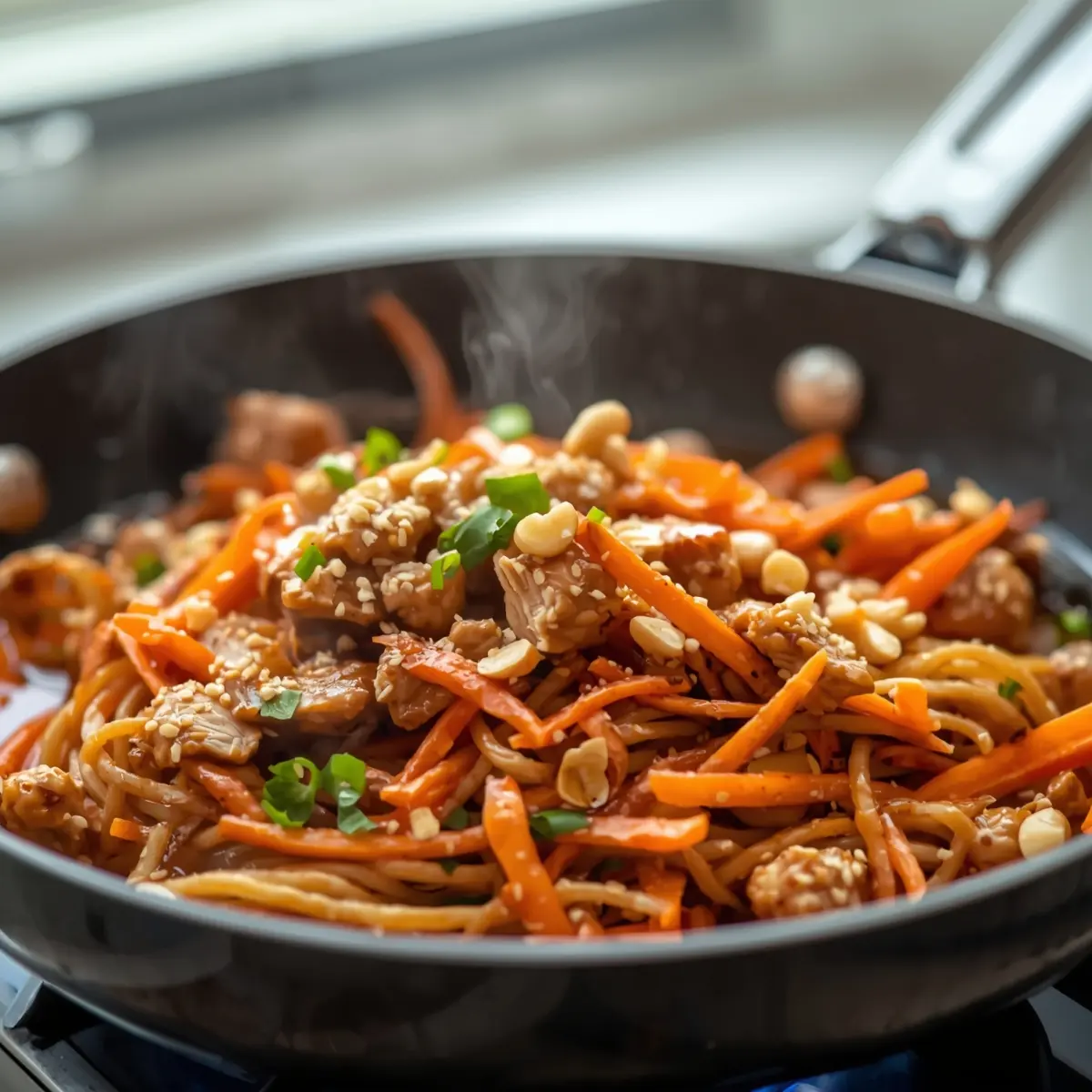
1. Bring a large pot of salted water to a rolling boil—you’re looking for 212°F. Add the rice noodles and cook according to package directions, usually around 8–10 minutes. Stir them once halfway through so they don’t stick together. Reserve 1/4 cup of the starchy cooking water before draining, then set the noodles aside in a colander.
2. While the noodles cook, whisk together your peanut butter, soy sauce, honey, lime juice, ginger, garlic, and sesame oil in a small bowl. The mixture will look thick and kinda separated at first—that’s totally normal. Whisk until mostly combined, then add 2 tablespoons of that reserved pasta water to loosen it up.
3. Return the drained noodles to the hot pot (don’t rinse it, you want that residual heat). Pour your sauce over them and toss constantly for about 60 seconds—you’ll hear the sauce sizzle as it hits the hot pan and the noodles, which means the emulsion is happening. Keep tossing until every strand gets coated.
4. Add the chicken strips and shredded carrots, tossing everything together for another minute. The residual heat will warm the chicken through if it’s already cooked. If the noodles look too thick, add another tablespoon of that reserved pasta water and toss again.
5. Transfer to serving bowls and sprinkle the chopped peanuts and chili flakes over the top. I always do this step last so the peanuts stay crispy and don’t get soggy from the sauce. The chili flakes add a little kick without overpowering the peanut flavor.
6. Drizzle with a tiny bit more sesame oil if you want—totally optional but it adds richness. When your kitchen smells like toasted peanuts and warm ginger, you know it’s ready to eat. Serve immediately while everything’s still steaming.
7. If you’re making this ahead, store it in the fridge and reheat gently before serving. Cold noodles work too, but honestly, this Thai peanut noodles recipe tastes best warm. The sauce coats better and the flavors pop more when there’s a little heat involved.
Serving ideas for Thai peanut noodles recipe
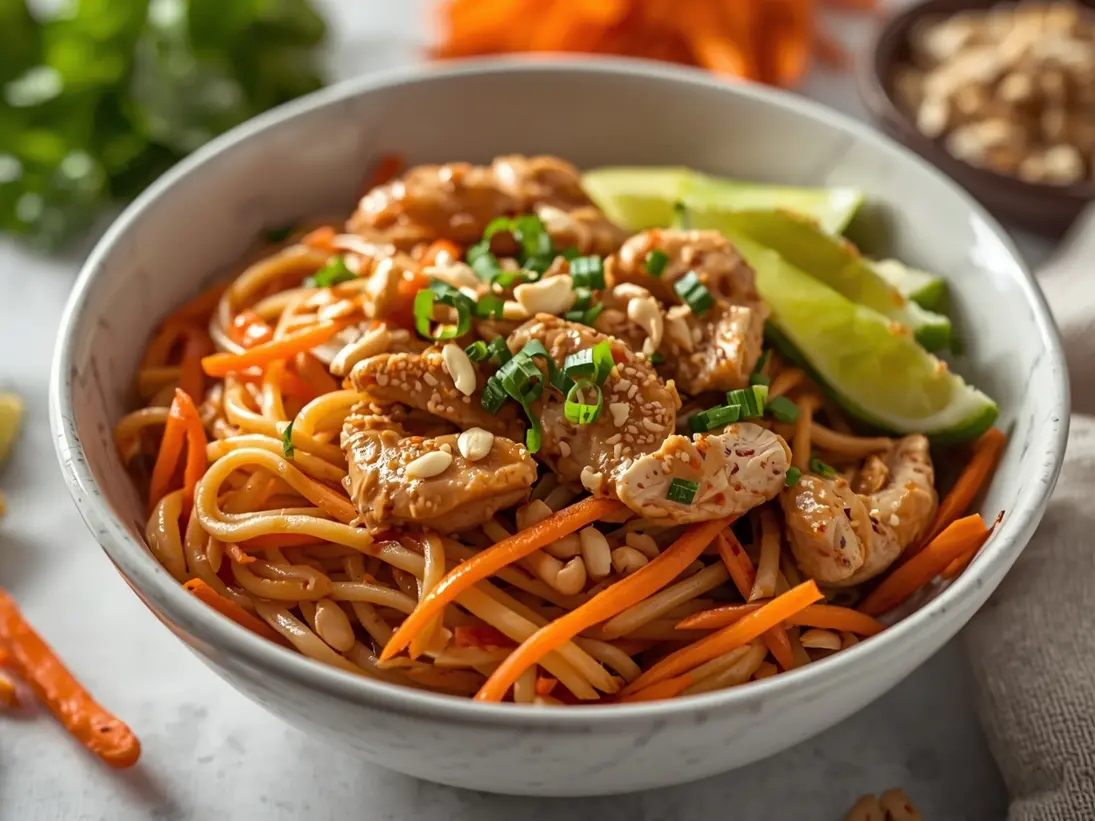
Pair these noodles with something that complements the richness of the peanut sauce.
Crispy spring rolls with sweet chili sauce
The contrast between the crispy, golden exterior of spring rolls and the soft, saucy noodles is exactly what makes this combo work. The sweet chili sauce adds brightness that cuts through the peanut richness perfectly. Check out Asian noodle bowl ideas for more pairing inspiration that works with this flavor profile.
Cucumber salad with rice vinegar
A cool, tangy cucumber salad provides temperature contrast against the warm noodles and refreshes your palate between bites. The vinegar’s acidity balances the creamy peanut sauce beautifully. This is my go-to side when I want something light and crisp alongside the heavier noodles.
Grilled chicken thighs
Protein-packed chicken thighs with a light char give you something substantial to build your meal around. The smoky, savory notes complement the sweet and nutty peanut sauce without competing for attention. You’ll have a complete dinner that feels way fancier than the 20 minutes it took to make.
Frequently asked questions
Can you make Thai peanut noodles ahead of time?
Yes, you can cook everything the day before and store it in the fridge, but reheat gently before eating. Cold noodles work for lunch bowls, but the sauce won’t cling as well since it thickens when cool.
Add a splash of water when reheating to loosen the sauce back up. The flavors taste best when the noodles are still warm, so don’t skip the reheating step if you want that restaurant-quality texture.
What can you substitute for peanut butter in this recipe?
Almond butter, tahini, or sunflower seed butter all work as direct swaps with similar ratios. Each one gives a different flavor—tahini makes it more savory, almond butter sweeter, and sunflower seed butter more neutral.
Just make sure whatever you choose is creamy, not chunky, so it emulsifies smoothly with the other sauce ingredients. I’ve tested all three and honestly, the technique matters more than which nut butter you pick.
How do you reheat leftover Thai peanut noodles?
Place them in a skillet over medium heat with a tablespoon of water, stirring constantly for 2–3 minutes until warmed through to 165°F. You can also microwave in a covered bowl for 90 seconds, stirring halfway through.
Add more water if the noodles look dry—the sauce will loosen up as it warms. Don’t overheat or the peanut butter can separate and taste greasy instead of silky.
Why is my Thai peanut noodles recipe sauce separating?
This happens when the sauce gets too hot or when you add cold ingredients to hot sauce without tempering. The peanut butter’s oils split from the other liquids, creating a grainy texture instead of smooth coating.
Always mix your sauce while the noodles are still steaming hot, then toss immediately. If separation happens anyway, whisk in a tablespoon of water and it’ll come back together.
Final thoughts
You now know what separates takeout-quality Thai peanut noodles recipe from the disappointing versions most people make at home—it’s all about timing and temperature. The sauce needs heat to emulsify, the noodles need to be hot enough to absorb it, and everything needs to come together in that narrow window before things cool down and separate.
The first bite hits different when you’ve nailed this technique. The sauce coats every strand, the noodles have just enough chew, and that warm peanut flavor with bright lime and spicy ginger creates this perfect balance that makes you want to keep eating. The crispy peanuts on top add texture that keeps things interesting all the way through.
Here’s what makes this recipe a total weeknight win: it genuinely takes 20 minutes from start to finish, uses ingredients you probably already have, and tastes like you spent way more effort than you actually did. The secret is respecting the heat and not rushing the emulsification step—that’s what separates this from every other peanut noodle recipe out there. Try it this week and bookmark this for your next quick dinner craving. For more easy Asian dinner ideas, check out quick noodle dinner recipes that follow this same fast-and-fresh approach.