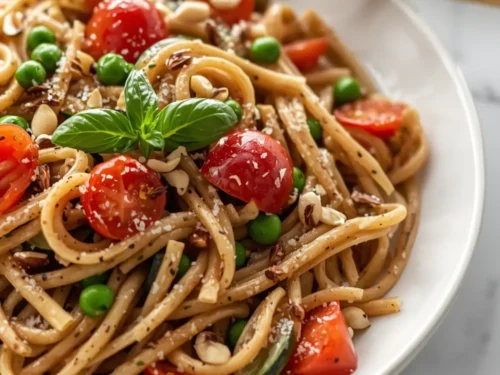
Best beautiful pasta primavera summer
beautiful pasta primavera summer features elegant veggie pasta and stunning fresh Italian twists. Perfect for quick, delicious meals. Discover how to elevate...
Ingredients
Method
- Bring a large pot of salted water to a rolling boil. Add the whole wheat pasta and cook for eight to ten minutes, stirring occasionally so it doesn't stick. You want it al dente—still with a slight bite—because it'll continue softening as everything comes together. This matters because overcooked pasta turns to mush and kills the texture contrast your dish needs.
- While the pasta cooks, heat the extra virgin olive oil in a large skillet over medium heat. I usually add the garlic first and let it perfume the oil for about one minute, but I'm careful not to let it brown because burnt garlic tastes bitter and ruins everything instantly. You'll smell when it's ready—that warm, welcoming garlic aroma means the timing is right.
- Add the zucchini and carrots to the skillet and cook for four minutes, stirring occasionally. The vegetables should soften slightly but still hold their shape. Marco always asks why I don't cook them longer, but undercooked vegetables in beautiful pasta primavera summer recipe taste bright and alive, while mushy ones feel like you're eating baby food. That contrast is the whole point.
- Stir in the cherry tomatoes and thawed peas, cooking for another two minutes until everything is heated through. The tomatoes should start to soften but not split apart entirely. If they burst completely, their juice waters down the entire dish, and you lose that concentrated tomato flavor you're actually after.
- Drain the pasta and add it directly to the skillet with the vegetables. Toss everything together gently for about one minute, making sure the pasta coats with the oil and mingles with every vegetable. I do this slowly because I'm nervous about breaking the pasta strands, though I know that's probably silly. The key is distributing everything evenly so no bite is vegetable-heavy or pasta-heavy.
- Remove the skillet from the heat. Stir in the salt, black pepper, and lemon juice first, then fold in the fresh basil and parsley. Never add fresh herbs while the pan is still hot—the heat destroys their flavor and color, and you'll end up with sad, gray-green bits instead of vibrant flavor.
- Divide the beautiful pasta primavera summer recipe among four bowls. Top each serving with two tablespoons of Parmesan cheese and approximately one-half tablespoon of toasted pine nuts. The cheese melts slightly from the pasta's residual warmth, and the nuts add that crucial crunch that separates "I made this" from "this tastes like I care."