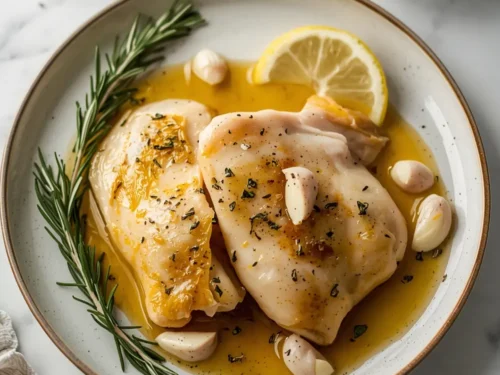
Best elegant baked lemon herb chicken
Elegant baked lemon herb chicken boasts beautiful lemon chicken flavor, stunning summer baked perfection. Simplify your dinner with effortless elegancetry no...
Ingredients
Method
- Preheat your oven to 375°F while you prepare the marinade. Combine olive oil, lemon zest, lemon juice, minced garlic, rosemary, thyme, oregano, salt, and pepper in a small bowl—why this order matters is that zest stays suspended in oil rather than sinking. I always taste the mixture with my fingertip at this stage to catch any seasoning gaps.
- Pat chicken thighs completely dry with paper towels, then arrange skin-side up in a baking dish. The dry surface allows the skin to brown properly instead of steaming; this is the foundation of the whole dish. Moisture is the enemy of browning—I learned this the hard way during a dinner party years ago.
- Pour the marinade over each thigh, coating the meat underneath and around the bone. Don't worry about even distribution because the chicken will release juices as it cooks. I always save about 2 tablespoons of the herb mixture separately for finishing—this raw element adds freshness you can't get if everything bakes together.
- Roast uncovered for 28–32 minutes, until the internal temperature reaches 165°F at the thickest part of the thigh without touching bone. The skin should have begun turning golden around the edges. Around the 20-minute mark, I peek in because ovens vary wildly, and I'd rather check early than miss the moment.
- Remove from oven and drizzle honey and chicken broth over each thigh, then dot with butter. Return to oven for exactly 3–4 minutes more until the glaze starts to bubble at the pan edges. This brief final roast caramelizes the honey and melts the butter into the existing juices without burning anything.
- Rest on the counter for 5 minutes before plating—this allows juices to redistribute into the meat rather than pooling on your plate. The chicken will carry over-cook slightly, so don't panic if the meat looks barely set. I always sprinkle the reserved fresh herb mixture and additional parsley at this exact moment while everything's still steaming.