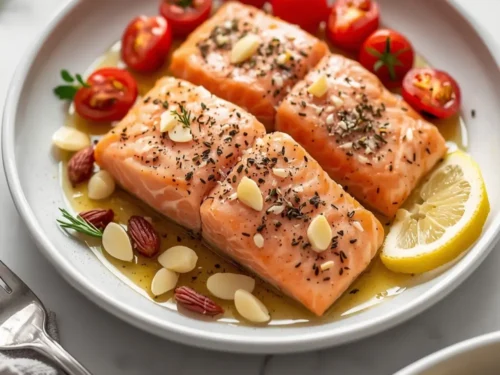
Best elegant sheet pan salmon weeknight
Elegant sheet pan salmon delivers quick, premium flavors perfect for cozy nights. Achieve restaurant-quality results effortlessly with minimal cleanup. Disco...
Ingredients
Method
- Preheat your oven to 400°F and line a sheet pan with parchment paper. This temperature is hot enough to develop those edges while keeping internal flesh from drying out. The parchment isn't just convenient—it prevents sticking and makes cleanup the easiest part of your entire evening.
- Pat your salmon fillets dry with paper towels and arrange them skin-side down on the prepared pan, leaving space between each piece. Moisture on the surface steams the fish instead of allowing the skin to develop texture. I learned this lesson the hard way after years of wondering why restaurant salmon had that satisfying edge and mine didn't.
- Drizzle the olive oil across all four fillets and rub garlic, thyme, rosemary, salt, and pepper directly onto the flesh. The oil acts as a heat conductor, helping herbs infuse while protecting the protein from drying. This step takes ninety seconds, and it's where most of your flavor actually comes from.
- Arrange halved cherry tomatoes and toasted almonds around the salmon fillets—not on top of them, but nestled in the space between. They roast in the same microclimate and release their juices into a pan sauce you'll absolutely want to spoon over everything. I scatter them generously because they shrink slightly and add that beautiful presentation factor without requiring extra plating work.
- Slice your lemon into thin rounds and layer them directly over each salmon fillet along with fresh dill and a drizzle of honey. The lemon steams the fish from above while its acidity cuts through the richness of the omega-3s. This is the moment where your elegant sheet pan salmon weeknight recipe actually starts looking like something you'd serve to people you're trying to impress.
- Roast for 18–20 minutes until the salmon flakes easily with a fork at the thickest point and edges show slight browning. The skin should peel away from flesh if you touch it gently—this tells you the protein is cooked through without being overdone. I set a timer for 18 minutes and check at that point rather than waiting the full 20, because thickness varies and I'd rather catch it early.
- Remove from the oven and let rest for 2 minutes before plating. This brief pause allows carry-over cooking to stop and the flesh to settle. The pan sauce pools around everything beautifully if you give it just two minutes of stillness.