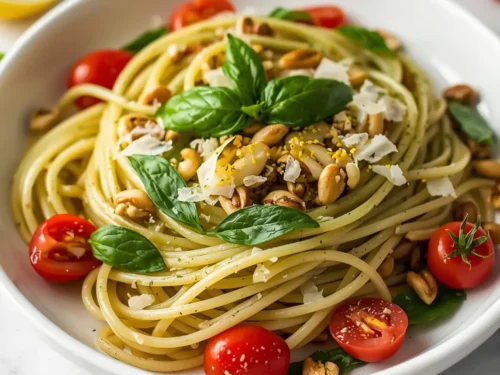
Best stunning cold pesto pasta summer
Stunning cold pesto pasta summer delivers creamy Italian summer delight with elegant pesto pasta and stunning cold elements, perfect for quick summer mealsdi...
Ingredients
Method
- Toast your pine nuts in a dry skillet over medium heat for 3–4 minutes, stirring constantly until they smell toasty and slightly darken. I learned this the hard way after making burnt nuts twice—the smell shifts from pleasant to acrid in about thirty seconds, so stay right there and watch them. This toasting step concentrates their flavor so your pesto doesn't taste like library paste.
- Cook the spaghetti in salted boiling water according to package directions, aiming for al dente texture (usually 9–11 minutes). I always reserve one cup of pasta water before draining—you might need it to loosen your pesto later if everything feels too thick. This water has starch in it, which actually helps the sauce coat the noodles better than regular water would.
- Drain the pasta and immediately transfer it to an ice bath (a large bowl filled with ice and cold water) for 2–3 minutes, stirring gently to cool it completely. This stops the cooking process and prevents the noodles from sticking together or continuing to absorb water. I know this feels like an extra step, but it's the reason your stunning cold pesto pasta summer stays separate instead of clumping into a dense mass.
- While pasta cools, combine basil, toasted pine nuts, garlic cloves, Parmesan, olive oil, lemon juice, salt, and pepper in a food processor and pulse until the mixture reaches a chunky paste consistency—don't over-blend or it becomes bitter and one-dimensional. Pesto should have some visible texture rather than turning into a smooth spread. Taste it now and adjust salt and pepper, because you can't fix it easily once it's on the pasta.
- Drain the cooled pasta thoroughly (spin it in a colander or pat it with paper towels), then transfer it to a large mixing bowl. Fold in the pesto gently, using about two-thirds of it at first, then add more if needed—you want pasta that's evenly coated but not drowning in sauce. I always taste a strand at this point and add more salt or lemon juice if it feels flat, because the cold temperature mutes flavors slightly.
- Fold in the cherry tomatoes and lemon zest gently just before serving, then top each bowl with toasted walnuts for crunch. The reason you add tomatoes last is because their acidity can break down the pesto if they sit in the sauce too long. This timing keeps your elegant pesto pasta looking fresh and vibrant on the plate.