Best Stunning Football Charcuterie Board 45 Min Elegant F...
Stunning football charcuterie board perfect for game day tailgates. Create an elegant fall spread with meats, cheeses, and seasonal accents. Discover your ne...
Ingredients
Method
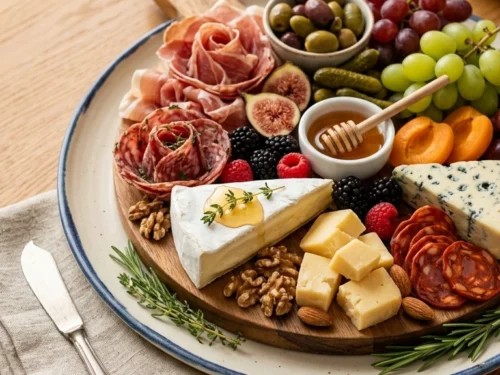
- Start by selecting your board or platter—aim for at least 24 inches in length to allow proper spacing. This visual breathing room is essential, as cramped boards lose their sophisticated appeal and make it harder for guests to select items without creating a mess.
- Arrange your cheeses first, positioning them in odd-number groupings (three clusters work beautifully). Leave generous gaps between each cheese variety so they maintain individual identity rather than blending into one confused mass on your game day board.
- Layer meats next by creating elegant folds and overlaps of smoked turkey, beef salami, and prosciutto around and between the cheese sections. Work with CIA-level precision here—each fold should showcase the meat's natural color and texture as a visual statement.
- Fill negative spaces with your stunning football charcuterie board's supporting players: olives in small bowls, roasted almonds scattered casually, and fresh grapes arranged in small clusters. This step determines whether it looks intentional or accidental, so take your time creating visual rhythm and balance.
- Add dried apricots, candied pecans, and dark chocolate squares in strategic clusters throughout, ensuring no single item dominates. Position these at the 2, 5, 8, and 11 o'clock positions for mathematical balance that feels organic rather than rigid.
- Place your fig jam and honey in matching small bowls at opposite corners—this creates symmetry while signaling to guests where spreads belong. Include small spoons for each, preventing double-dipping and maintaining hygiene standards that Marco always prioritized in professional entertaining.
- Tuck cornichons and mixed berries into remaining gaps, treating them as edible garnish that serves dual purposes: decoration and delicious bites.
- Assemble exactly 30 minutes before serving to ensure maximum freshness while allowing you time to set out small plates, napkins, and spreaders for your guests.