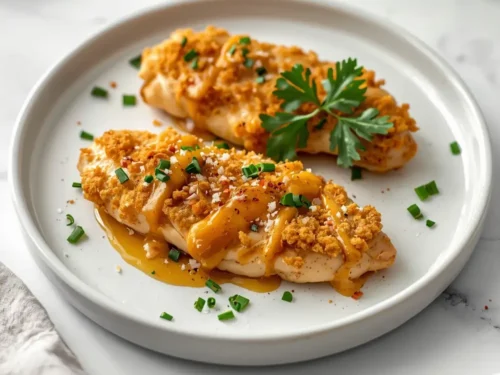
Best stunning honey mustard baked chicken
stunning honey mustard baked chicken combines rich flavor with quick preparation. Enjoy elegant summer dinners or versatile meal solutionstry this perfect re...
Ingredients
Method
- Preheat your oven to 400°F and line a baking sheet with parchment paper. This temperature matters because it browns the coating without drying chicken. I learned this the hard way after years of 375°F resulting in pale, sad chicken.
- Pat your chicken breasts completely dry with paper towels, then season both sides with salt and pepper. Moisture on the surface prevents the coating from adhering properly, and that ruins the entire beautiful honey mustard effect. Dry chicken is non-negotiable here.
- Mix honey, yellow mustard, minced garlic, and lemon juice in a small bowl until the glaze looks smooth and glossy. This is where the flavor actually happens—the garlic blooms as it sits in the acid from lemon juice, so don't rush this step. Taste it if you want; you'll notice the brightness immediately.
- Brush the glaze all over each chicken breast, coating front, back, and sides generously. Pour the panko breadcrumbs into another bowl, then roll each glazed breast through them until fully covered. The glaze acts as adhesive, and panko sticks where regular breadcrumbs would slide right off—this is the trick that makes stunning honey mustard baked chicken recipe actually stay together.
- Arrange coated breasts on your prepared baking sheet and drizzle with olive oil to help the coating toast properly. The oil prevents the panko from burning while keeping the inside tender. I used to skip this step and ended up with burnt crumbs and overcooked chicken.
- Bake for 32–37 minutes until the internal temperature reaches 165°F at the thickest part. The top should be deep golden, not pale. Marco once asked if the dark edges meant I'd messed up—I had to explain that's exactly the point because the crumbs actually caramelize.
- Remove from the oven and let rest for 5 minutes before serving so juices redistribute. This makes the difference between chicken that seems juicy and chicken that actually stays moist when you cut into it.