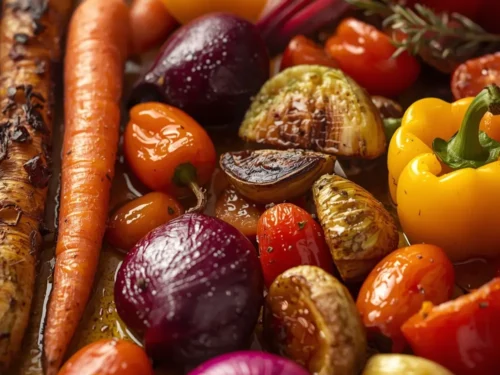
Easter Roasted Vegetables Colorful and Caramelized
Easter roasted vegetables simplifies spring prep with easy ingredients; try now!
Ingredients
Method
- Preheat your oven to 425°F and line a large baking sheet with parchment paper (makes cleanup so much easier, trust me). Pat your veggies dry with a clean kitchen towel — this is super important because moisture stops caramelization. Wet vegetables will steam instead of roast, and you definitely don't want that.
- Add all your chopped vegetables to a large bowl and drizzle with olive oil, honey, salt, and black pepper. Toss everything together until every piece is coated — I use my hands because it's faster and you can feel if anything's missed. Make sure the honey gets evenly distributed throughout the mix.
- Sprinkle the dried rosemary and thyme over the vegetables and toss again for about 30 seconds. The dried herbs will hydrate slightly and stick to the oil-coated veggies. This distributes the flavor so much better than sprinkling them on top of the pan.
- Spread the vegetables in a single layer on your prepared baking sheet, making sure nothing overlaps (this is key for roasting). If you crowd the pan, they'll steam instead of caramelize and get mushy. I always use two baking sheets for this recipe rather than piling everything on one.
- Roast for 20 minutes, then pull the pan out and give everything a good stir with a wooden spoon or spatula. Don't panic if things look a little dry at first — the vegetables release moisture as they cook. After stirring, pop it back in for another 12-15 minutes until the edges turn golden brown.
- The vegetables are done when the beets are tender when pierced with a fork and the onion pieces start to caramelize at the edges. The tomatoes might burst a little — that's totally fine and actually looks really nice. You want to see those golden-brown spots on the carrots and peppers.
- Let everything cool on the baking sheet for 2-3 minutes before transferring to a serving dish (this helps the vegetables firm up slightly). Taste and adjust seasonings if needed — sometimes I add a tiny pinch more salt. Serve warm or at room temperature, whatever works for your Easter dinner timing.