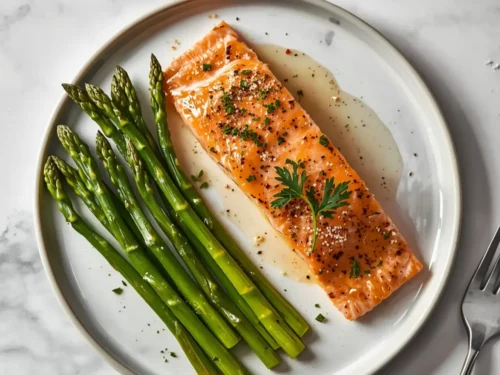
Easy beautiful 30 minute salmon dinner
Beautiful 30 minute salmon dinner: elegant quick salmon, stunning weeknight, beautiful fast. Experience these benefits with a try now, perfect for meals.
Ingredients
Method
- Start your quinoa first—rinse it under cold water, then add to a pot with 2 cups water and a pinch of salt. Bring to a boil, then reduce heat and simmer for 15 minutes covered. I always do this step before touching the salmon because it buys me ten minutes of focused time on the fish without multitasking stress.
- While quinoa cooks, pat your salmon fillets completely dry with paper towels—this is the critical step most home cooks skip that separates a beautiful 30 minute salmon dinner recipe from a mediocre one. Moisture on the surface prevents browning, so don't rush this. Season both sides generously with sea salt and black pepper, then set aside on a clean plate.
- Heat your olive oil in a large skillet over medium-high heat until it shimmers but doesn't smoke. Add minced garlic and let it cook for exactly 30 seconds—you want fragrant, not browned—then immediately add the dill and parsley. The oil's heat releases the herb oils, infusing the fat before your salmon touches the pan, which is why this beautiful fast salmon tastes better than versions that just sprinkle herbs on top.
- Place salmon skin-side up in the hot oil and sear for 4 minutes without moving it. Resist the urge to peek or flip early—you'll break the crust that's forming. Listen for the gentle sizzle that steadies into a quiet hiss; that's your sensory cue that the Maillard reaction (the browning that creates flavor) is happening underneath.
- Flip the salmon skin-side down and arrange the trimmed asparagus around the fillets in a single layer. Add 2 tbsp butter and 1 tbsp honey to the pan, letting them melt directly into the oil. The asparagus will start releasing water, which steams the salmon through while the honey caramelizes, creating a glaze that looks restaurant-quality.
- Cook for 6-8 minutes until the asparagus is tender and the salmon flakes easily when tested with a fork at its thickest point. The beautiful 30 minute salmon dinner recipe depends on this timing—undercook by a minute and the center stays translucent; overcook by two and the edges tighten. I check by pressing the flesh gently; it should yield slightly but not feel mushy.
- Remove the skillet from heat and squeeze fresh lemon juice over everything, letting the residual heat warm the juice without cooking off its brightness. Let the salmon rest exactly 3 minutes in the pan—this redistribution time lets the proteins relax so they don't release liquid when you plate.
- Fluff your quinoa with a fork and divide between two plates, then carefully transfer the salmon and asparagus on top, spooning the pan's remaining lemon-butter glaze over both.