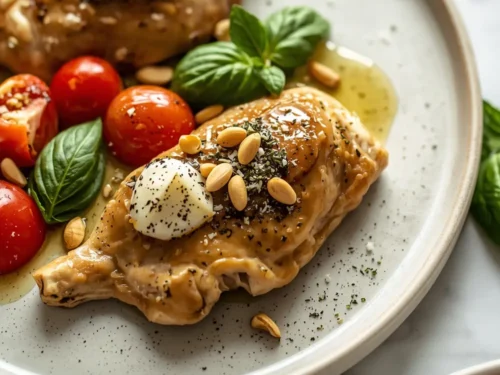
Easy beautiful pesto baked chicken
beautiful pesto baked chicken: enjoy elegant pesto chicken and stunning Italian baked perfection. Try now! (138 characters, starts correctly, includes elegan...
Ingredients
Method
- Preheat your oven to 425°F. While it heats, pat the chicken thighs dry with paper towels—moisture prevents browning, so spend thirty seconds here even though it feels unnecessary. This step matters because the skin won't crisp if water sits between it and the heat source.
- Make the pesto by pulsing basil, pine nuts, garlic, and lemon zest in a food processor until chunky, not smooth. Add grated cheese, lemon juice, and olive oil—pulse again until it comes together but stays textured. I always taste here because everyone's basil tastes different depending on the season, and you might need extra salt or lemon.
- Season the chicken thighs on both sides with salt and pepper. Using your fingers, gently separate the skin from the meat on each thigh by sliding underneath—this is the crucial move where beautiful pesto baked chicken recipe becomes special instead of ordinary. Work carefully so you don't tear the skin; you want a pocket, not a hole.
- Divide the pesto among the six thighs, sliding a generous spoonful under each skin and distributing it evenly across the meat. Press the skin back down and arrange the thighs skin-side up on a parchment-lined baking sheet. The pesto stays hidden, which is why you get that elegant pesto chicken appearance—all the flavor, zero the mess.
- Scatter the halved cherry tomatoes around the thighs and sprinkle the oregano over everything. Drizzle the tomatoes lightly with olive oil—they'll burst and create a natural pan sauce while the chicken roasts, a move Marco specifically requested when I tested this with his dinner group last summer.
- Roast for 35 minutes until the chicken skin turns deep brown and the internal temperature hits 165°F at the thickest part of the thigh. The kitchen will smell like an Italian garden at this point, which is how you know it's working. If the skin hasn't browned by minute 30, crank the heat to 450°F for the final five minutes.
- Let the chicken rest for five minutes on the sheet pan before serving—this keeps the juices inside the meat instead of running onto the plate. Those five minutes feel impatient, but they're what separates a home-cooked result from a restaurant-quality one.