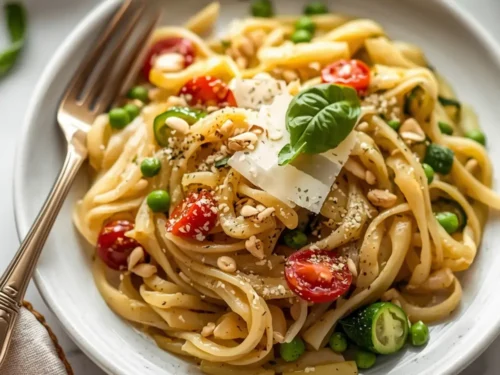
Easy beautiful summer orzo primavera
Beautiful summer orzo primavera brings stunning Italian fresh pasta to your table effortlessly. Enjoy this elegant orzo veggie, perfect for summer gatherings...
Ingredients
Method
- Bring a large pot of salted water to a rolling boil, then add orzo and cook according to package directions—usually eight to ten minutes. I always taste at seven minutes because I prefer orzo with a tiny bite rather than completely soft.
- While water heats, warm olive oil in a large skillet over medium heat and add diced onion. Let it cook for three minutes, stirring occasionally, until it becomes translucent and sweet—this matters because raw onion would taste sharp and wrong in the finished beautiful summer orzo primavera recipe.
- Add minced garlic to the pan and cook for forty-five seconds until fragrant, then add both zucchini and yellow squash slices. Here's where I confess I used to overcrowd the pan—don't do that. Vegetables need breathing room to caramelize slightly rather than steam, which is the difference between a beautiful Italian dish and mushy sadness.
- Cook vegetables for five minutes, stirring occasionally, until they develop light golden edges and still have slight firmness. This is the critical moment: you want vegetables that taste like themselves, not vegetables that surrendered to heat.
- Drain cooked orzo and add it directly to the skillet with vegetables, stirring gently to combine. Pour in lemon juice and toss everything together for about one minute over low heat—this warms the beautiful summer orzo primavera recipe without breaking the vegetables apart.
- Remove from heat and stir in frozen peas, letting residual heat thaw them gently. Add torn basil now, not before, because heat destroys the delicate bright quality that makes this stunning summer fresh pasta actually taste fresh.
- Divide among four bowls and top each with toasted pine nuts and grated parmesan, finishing with a sprinkle of lemon zest. That final zest hits your palate first and reminds you that this beautiful summer orzo primavera recipe tastes like citrus and summer and something you definitely didn't make on a weeknight.