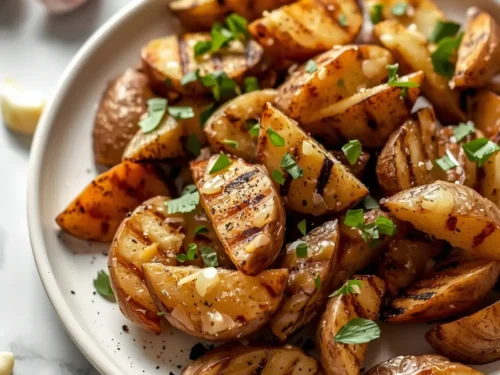
Stunning Grilled Potato Wedges for an Elegant Summer Cookout Side
stunning grilled potato wedges summer provide elegant summer BBQ enhancements featuring beautiful grilled potatoes and sophisticated sides. Simple prep, amaz...
Ingredients
Method
- Wash and pat your potatoes completely dry—I use paper towels and take my time here because moisture prevents the seasoning from sticking. Cut each potato lengthwise into 4 or 5 wedges, keeping them roughly ¾-inch thick so they cook evenly without drying out on the outside. This thickness matters because thin wedges become charcoal while thick ones stay raw in the center.
- In a large bowl, toss the wedges with olive oil until every surface glistens, then sprinkle salt, black pepper, smoked paprika, garlic powder, and dried rosemary directly over them. I confess I usually do this by hand, working the seasonings in with my fingers to make sure nothing settles at the bottom—take 2 minutes and hit every crevice. Why bother? Because uneven seasoning is why people think grilled potatoes taste boring.
- Preheat your grill to medium-high heat (around 400°F) and lightly oil the grates with a paper towel dipped in oil. When you can hold your hand 2 inches above the grates for exactly 4 seconds, you're at the right temperature. This step prevents sticking and creates the conditions for that caramelized exterior on your stunning grilled potato wedges summer batch.
- Place wedges flat-side down on the grill and resist the urge to move them for 5-7 minutes. You'll hear them sizzle immediately—that's your cue that the searing process has started. When you peek underneath and see deep brown marks, flip. This patience creates the beautiful grilling lines your guests will photograph.
- Grill the second side for another 5-7 minutes until the inside feels fork-tender when you pierce it gently. The wedges should bend slightly but not collapse into mushiness. This is my vulnerability moment: I've overcooked these before, and they go from elegant to mushy in 90 seconds. Set a phone timer if you need to.
- Scatter the grated cheddar over all the wedges and cover the grill with foil or a lid for 1 minute until the cheese melts into every pocket and wedge crevice. This final step transforms them from beautiful grilled potatoes into something restaurant-worthy. The heat is residual now, so the cheese won't burn—it just softens and gets creamy.
- Transfer everything to a serving platter, then immediately sprinkle the fresh parsley, minced garlic, and red pepper flakes over the top. Fresh garlic added at the very end tastes bright and sharp compared to the powdered version baked into the seasonings.